
Commercial Rooftop Unit Repair on Everett Rain-Season Roofs
After driving rain, the damper seal and outdoor coil fail first. We check those two before a cabinet swap on naval-adjacent and industrial roofs.

Wet weather changes the first check. Same-day scheduling when capacity allows—aligned with how we describe service on the A/C Dr. Naz homepage.
What a wet-week no-cool call actually shows
Commercial rooftop unit repair in Everett usually starts after a wet stretch: the outdoor-air damper is stuck and the coil is matted, so the compressor runs on air it should have dumped. We watch the linkage and mixed-air temperature before anyone names a failed compressor.
What shows up after a wet stretch
- Damper blade seized after rain, mixed-air temperature never moves
- Outdoor coil matted with wet debris, head pressure climbing
- Condensate sitting in a rusted pan on a naval-adjacent roof
- Belt slip only after the coil is washed and the blower still feels light
- Contactor chatter checked only after the soaked parts are ruled out
Notes we leave with the plant lead
The note names damper travel, mixed-air change, and whether the outdoor coil is plugged with wet debris. If those three explain the warm floor, the compressor stays off the quote and the spend goes to the seal, a coil wash, or a belt that is slipping after the rain.
RTU economizer troubleshooting guide
RTU high-pressure lockout guide
Commercial RTU not cooling (troubleshoot guide)
Make-up air (MUA) blower diagnostics
Total external static pressure testing
Greater Seattle commercial RTU repair hub


Legacy roof openings that starve the blower
On these industrial roofs the blower can be on while the far zone stays warm because the cabinet sits on an older opening that no longer matches the base. We measure that gap before a motor quote.
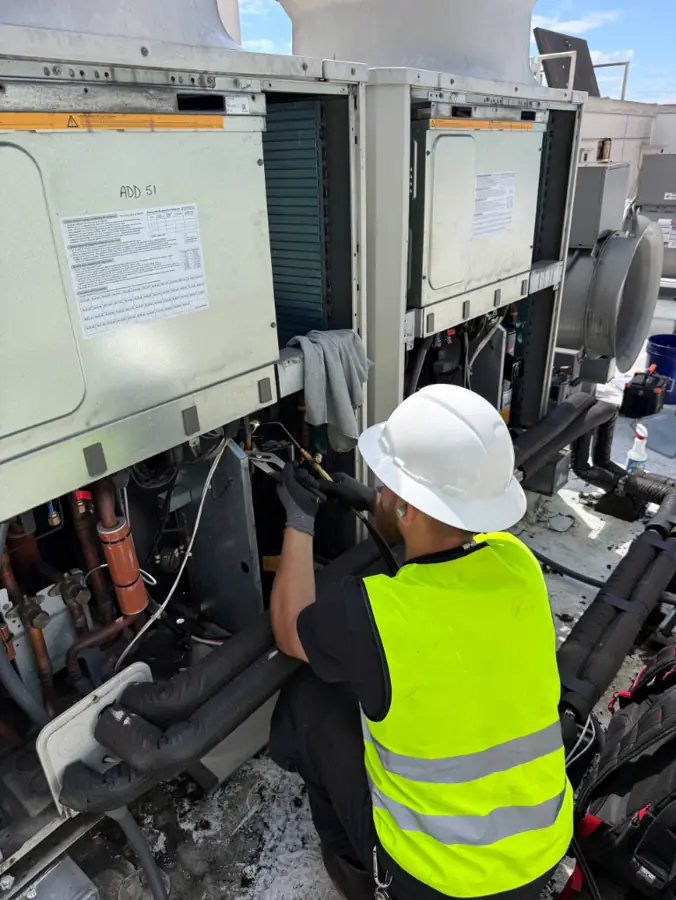
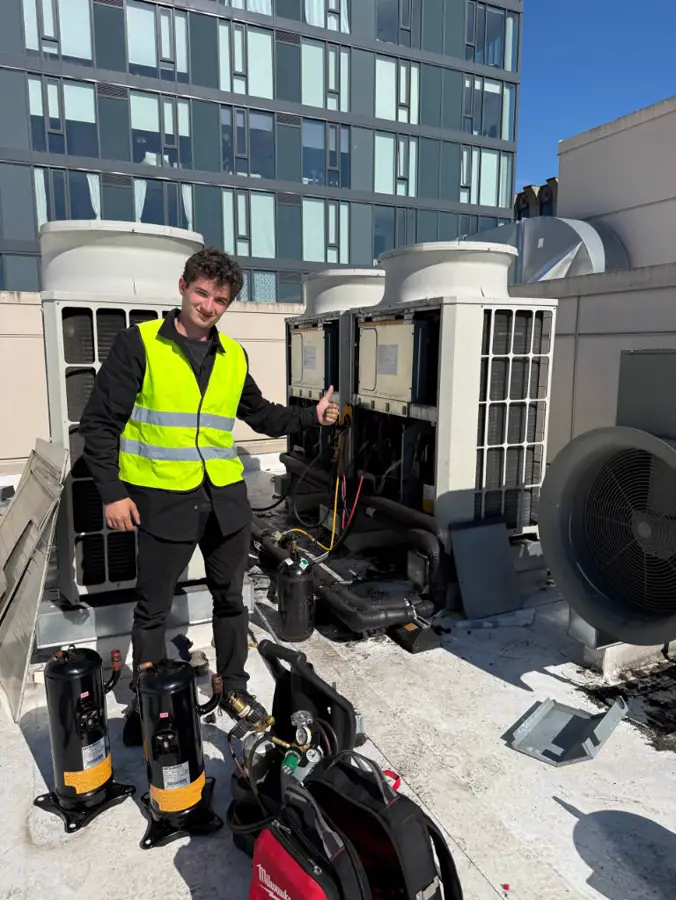
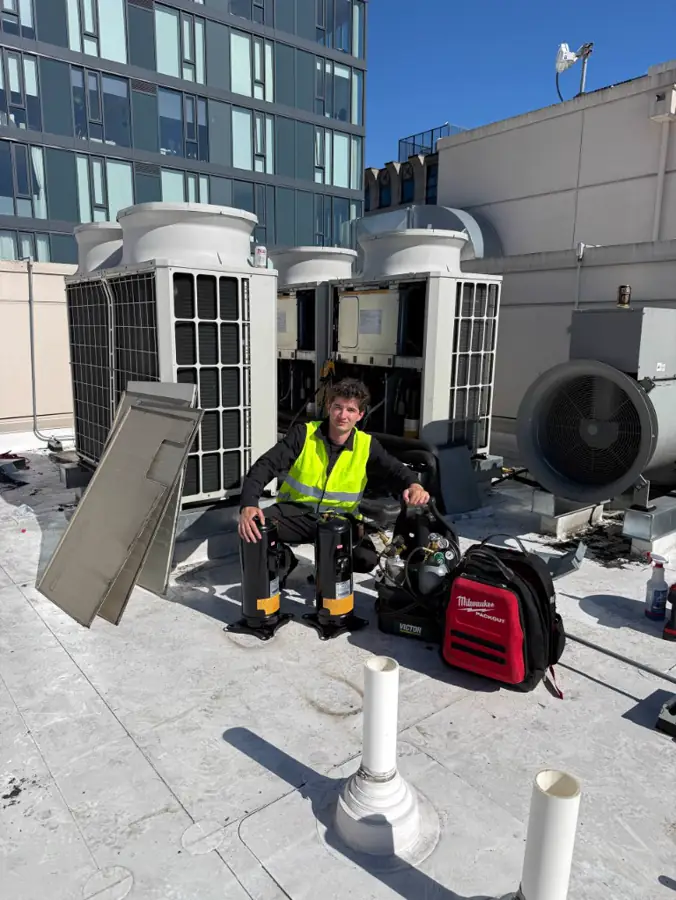
Neighborhoods along the plant and marina side
Commercial rooftop unit repair in Everett on these roofs is the wet-week call. Tell dispatch the address, whether the no-cool started after rain, and a nameplate photo so the window is honest.
Plant, marina, and south industrial floors
- Downtown Everett marina roofs: Hospitality floors that go warm after a wet week.
- Naval-adjacent industrial yards: Cafeteria cabinets on older openings.
- Casino Road and south industrial rows: Restaurant rooftops that lock out after driving rain.
- Port Gardner venues: Damper seals that stick when the wind comes off the water.
Not sure we can reach you today? Call (425) 535-8990 with the site address and whether the no-cool started after rain—we will confirm whether we can schedule the visit.
Other commercial RTU service areas
Regional overview stays on the Greater Seattle commercial RTU repair hub. Nearby pages: Lynnwood, Edmonds, Marysville.
Notes already published on soaked economizers
RTU economizer troubleshooting · RTU high-pressure lockout guide · RTU not cooling guide
Soaked-economizer and coil-fouling notes live on the guides above. Broader building work stays in the silo section below.
If a circuit has to be opened, recovery follows EPA Section 608. Occupied-floor air guidance stays with OSHA indoor environmental quality.
When the call belongs on another silo
This page stays on packaged rooftops. Cooling-only work lives on our commercial AC repair hub. Heat-pump heating faults live on commercial heat pump repair. Full building HVAC lives on commercial HVAC repair.
Questions from plant leads and marina facilities
Why does the economizer bind after a few wet days?
The damper blade swells against a tired seal, or the linkage seizes, and mixed-air temperature never moves even when the controller shows outdoor air. We command the damper and watch the blade. If it does not travel, we do not call it a compressor fault.
What does salt mist do to an outdoor coil before the compressor trips?
Fine mist off the water mats the outdoor coil. Head pressure climbs while the indoor blower is still commanded on. A coil wash is the test, not a new compressor, once the condenser fan is actually spinning.
How do we tell a mismatched roof opening from a weak blower?
We measure supply static at the cabinet discharge and blower amp draw. If the wheel is clean, the belt is tight, and static is high right at the opening, the old metal is starving the duct. That quote is metal and seal, not a motor, unless the amps say otherwise.
When do we stop and recover refrigerant on an older cabinet?
If the circuit has to be opened, recovery happens before the gauges stay on the unit. We use EPA Section 608 Universal for that work. We do not top off a leaking older cabinet and call it the repair.
What photo should be ready before we leave for the water?
The cabinet nameplate, and a photo of the damper linkage if the hatch is already open. Model and refrigerant on the plate decide whether a coil wash or a seal is the first quote. More short answers live on the main FAQ page.
Packaged cabinet down after a wet week.
Earliest window still hinges on drive radius, queue depth, and whether a coil or seal is on the truck—confirm live when you speak with dispatch.