
Cooler service for restaurants, campus cafés, hotel kitchens, and grocers
Walk-In Cooler Repair Redmond, WA

HVAC/R techs with EPA Section 608 Universal certification, working on medium-temp boxes for restaurant, café, and campus kitchens.
Product temperature comes first
Restaurants, hotel kitchens, campus cafés, and grocers call A/C Dr. Naz for walk-in cooler repair in Redmond, and the visit is same-day when capacity allows. The first thing the tech does on site is push a probe thermometer into the product, because that reading, not the number on the door display, sets how urgent the job is.
Typical calls are a box that drifts up a few degrees every afternoon, a coil that frosts over, or a compressor that hums but won’t start. Each one gets worked in the same order: product temperature, then amp draw on the compressor and fans, then pressures and superheat. Parts come up only after that.
Low-temp boxes run colder and defrost differently, so freezers are covered on our Redmond freezer repair page.
Back-bar coolers and merchandisers run on their own self-contained systems, and our commercial refrigeration repair hub covers those.



Four things to write down before you call
- The box reading, twice: once now and once a few minutes later, so we know whether it is holding or still climbing.
- What the condensing unit is doing: running, silent, or humming and then clicking off. That one detail points the tech toward the start circuit or away from it.
- Ice or water: frost on the coil face, or water pooling under it, narrows things down to airflow, defrost, or the drain.
- A nameplate photo: the model and serial number help dispatch route the call and size up the job.
“The reading tells us how fast to move. The nameplate tells us what we’re walking into.”
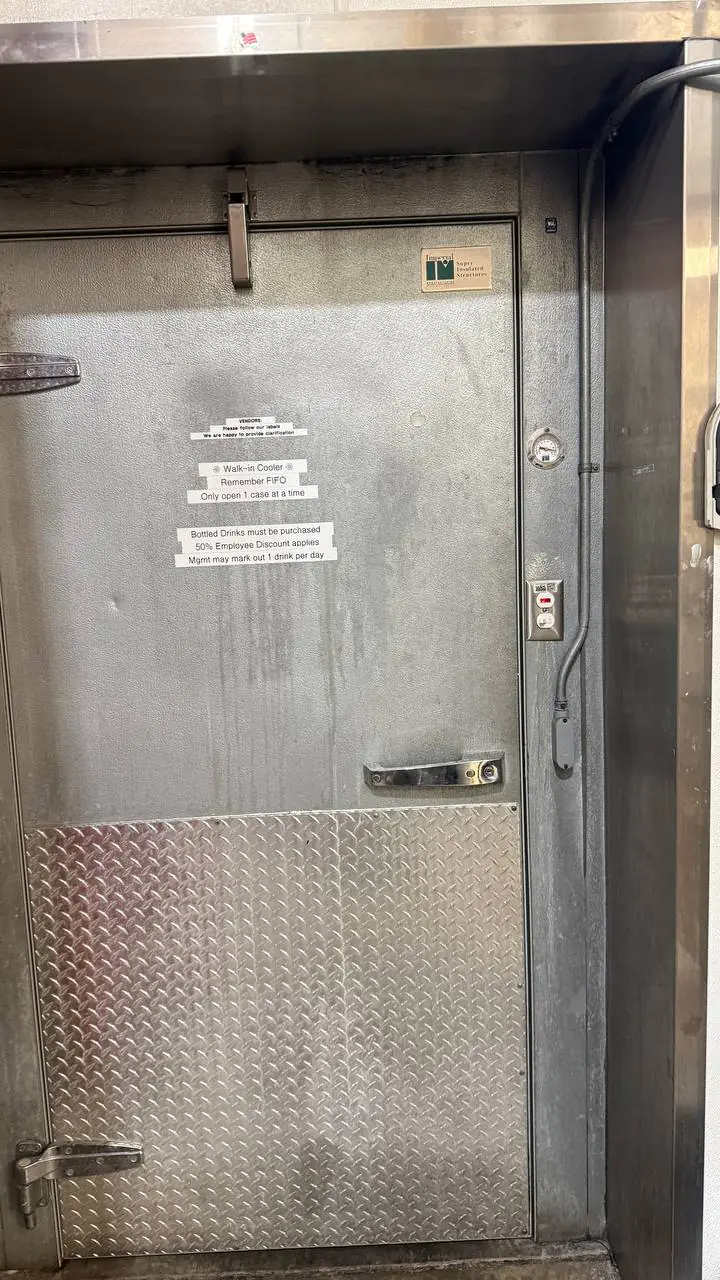
When the compressor won’t start, or won’t stay running
The signs tend to show up at the condensing unit before they show up in the box: a hum followed by a click, a unit that starts and drops out again, or a breaker that keeps tripping. Meanwhile the box warms slowly, because nothing is moving heat out of it. That pattern usually points to the parts that start the compressor rather than the compressor itself.
Worth doing while you wait: keep a running log of the box temperature, one entry every thirty minutes. It shows the tech how fast the box has been losing ground.

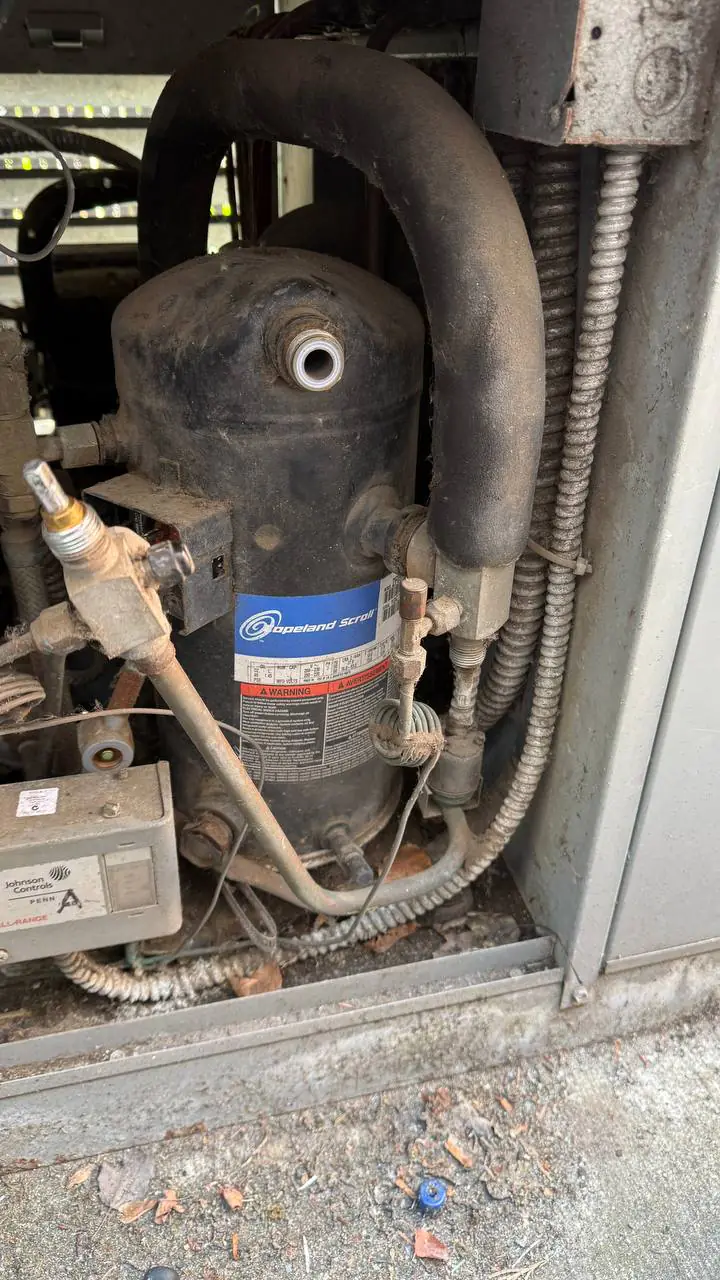
Tests at the condensing unit
Before anyone calls the compressor dead, three things get checked:
- Capacitors: start and run capacitors are tested with a meter. A weak or bulging one can leave a healthy compressor humming without starting.
- Relay, contactor, and overload: each is checked for the voltage and continuity it should have, since any one of them can cut power to the compressor.
- Amp draw and oil: a clamp meter shows what the compressor pulls against its nameplate rating, and an acid test on the oil shows whether it has run hot long enough to do damage.
“Start parts get ruled out before anyone condemns the compressor.”
Fixed on the spot, or a part to order
Capacitors and controls are parts the tech normally carries, so a start-circuit fault is often fixed the same visit. A compressor that has truly failed has to be ordered, and you get the price and an expected delivery date on the spot, before the van pulls away.
- Start parts: the failed capacitor or control is replaced, the compressor is restarted, and its amp draw is checked against the nameplate.
- Filter drier: if the oil test shows acid or the drier is restricted, the refrigerant is recovered first and the drier is replaced before the system is recharged.
- Compressor: replaced only when the start parts check out and the readings still point to it. Until the new one arrives, the tech talks through which product to move into reach-ins that are holding temperature.
Readings you keep
The amp draws, capacitor readings, and oil test result go into the summary left at the end of the visit, next to the box and product temperatures. If the problem comes back, the next visit starts from those numbers instead of from scratch.
Start components and the other parts on a walk-in are covered in more detail on our cooler component repair page.
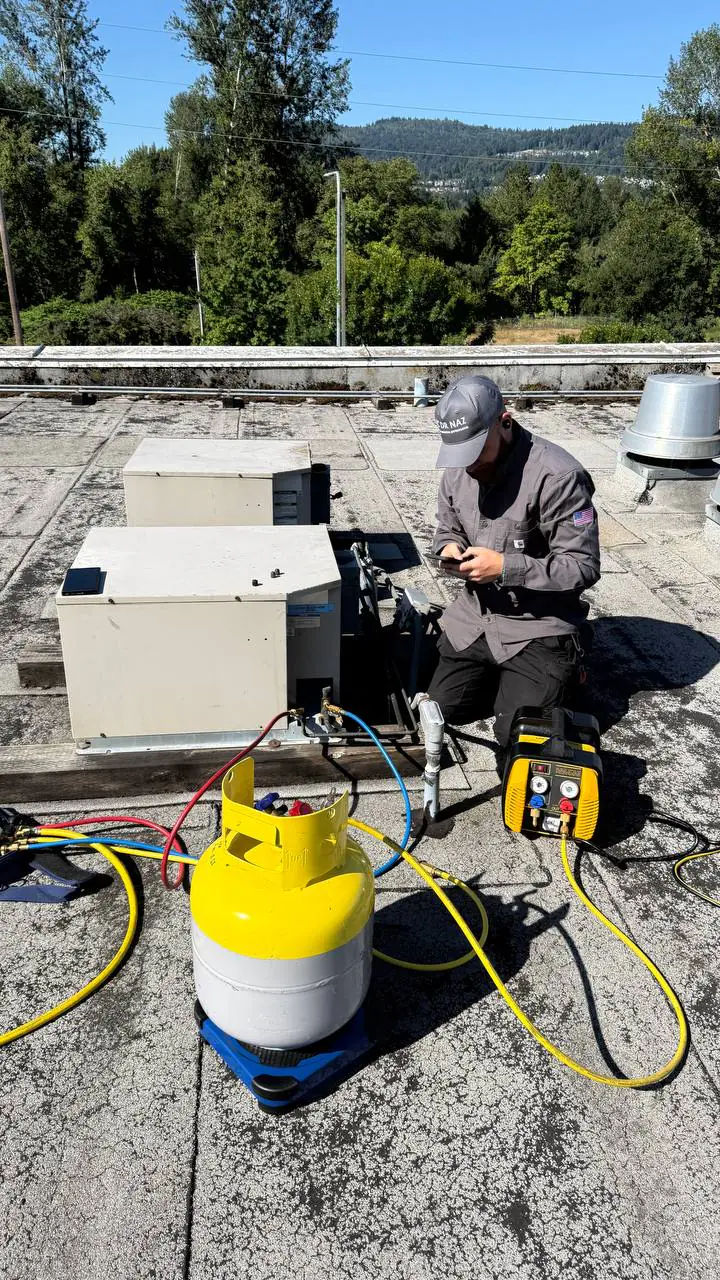
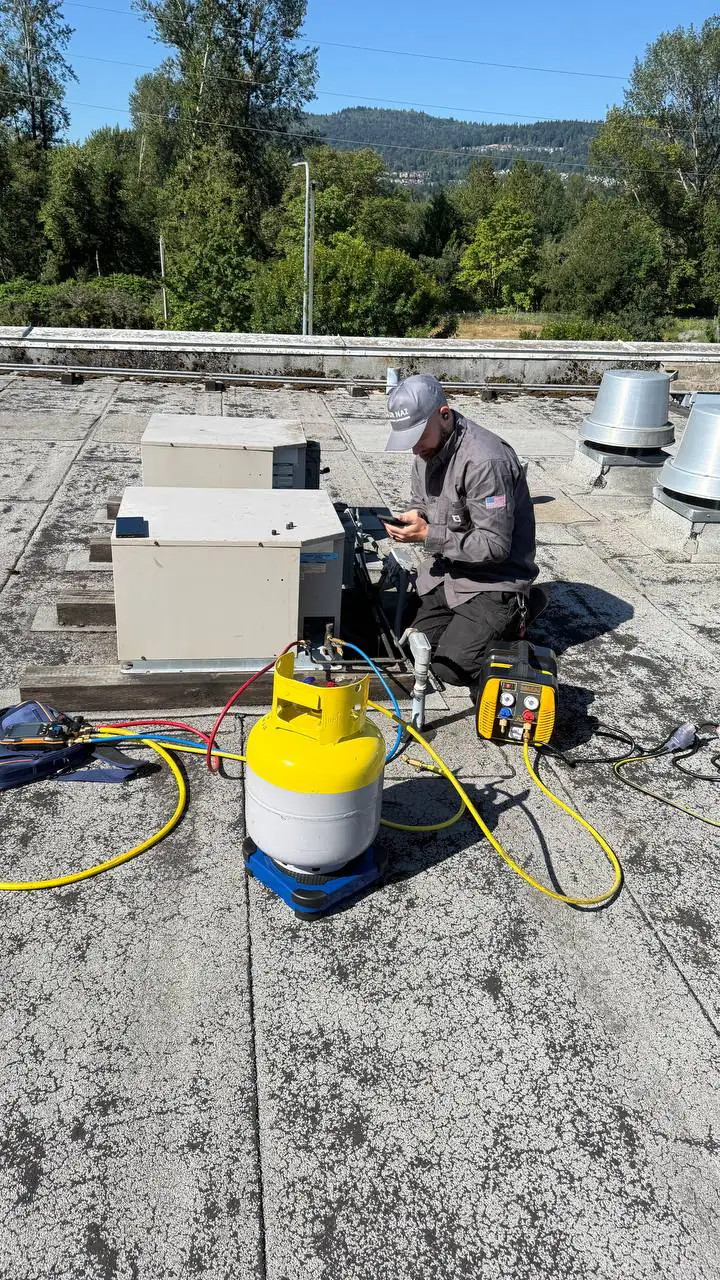
What every visit includes
From October on, every visit includes a look at the door gaskets, the door heater, and the drain line, whatever the call was for. Damp air finds a torn gasket quickly, and a door heater that has quit lets the frame frost over until the door stops sealing.
Opening the refrigerant side, as with a filter drier change, falls under A/C Dr. Naz’s EPA Section 608 Universal certification.
Between visits, a strip of paper is the quickest gasket test: shut the door on it in several spots, and anywhere it pulls free without any drag, cold air is getting out.
Our standards on every job:
- Readings before parts: nothing gets replaced until a measurement points to it.
- A full cycle: the box is run through a complete cycle so the controls, fans, defrost, and compressor are seen working together.
- Straight answers on scope: if the fault is in a reach-in or on the hot line, the tech says so and points you to the right service.
Our Redmond service area
Cooler calls across the city, by area:
- Downtown & Redmond Town Center: kitchens behind the shops and dining rooms
- Overlake: campus cafés and mixed-use buildings
- Education Hill: grocers and neighborhood dining
- Marymoor & Redmond Way: grocery and retail back rooms
- Willows Road & Sammamish River: food-service kitchens
Call Priority and the ZIP Codes We Cover
Same-day walk-in cooler repair in Redmond depends on that day’s capacity. Calls are ranked by risk to the food, so a rising temperature moves you up the list faster than an odd noise does.
We cover the 98052, 98053, and 98073 ZIP codes. Campus cafés and hotel kitchens often run more than one walk-in; if another box shares a wall or a condensing unit with the one that failed, mention it on the call.
Nearby cooler pages are listed below if the kitchen is just over the city line.
Freezers, reach-ins, and hot-line equipment have their own pages in the same list.
Nearby cities and related equipment

Quick answers
Our display says the box is fine, but the product feels warm. Which is right?
Go by the product. A probe thermometer pushed into a case of milk or a tray of prep tells you what the food is actually at; the display only reads the air near its sensor, and sensors drift. A big gap between the two usually means the control needs attention rather than the refrigeration side.
What should we do with the product until the tech arrives?
Anything that can’t go above 41°F, Washington’s cold-holding limit for most food under the state’s food safety rules, should move first: dairy and raw proteins into a reach-in that is still cold. Then leave the walk-in door closed so the box keeps what cold it has.
Can the same visit cover reach-ins or the hot line?
Reach-ins and prep tables are part of the same cold-side work, so mention them when you call. Ovens, fryers, and ranges are handled separately, through our kitchen appliance repair page.
Why does the cooler keep tripping its breaker?
Usually because something on the electrical side is pulling too much current: a compressor struggling to start, a shorted fan motor, or a failing contactor. Note when it trips and avoid resetting it over and over, since repeated restarts are hard on a compressor that is already struggling.
Looking for maintenance tips instead? Our cold-side FAQ collects them.
Box above 41°F, or a compressor that won’t start? Call (425) 535-8990 and have the nameplate photo handy, or send us the details.
HVAC/R Certified | Locally Owned | Professional Diagnostics