
Same-day diagnostics when capacity allows, from six-foot cafe boxes to commissary coolers
EPA Universal Walk-In Cooler Repair Seattle, WA

Seattle restaurants, grocers, and commissaries get cooler diagnostics from HVAC/R-certified techs holding EPA Section 608 Universal.
How a warm-box call runs
A/C Dr. Naz handles walk-in cooler repair in Seattle for restaurants, grocers, commissaries, and hotel kitchens. Most calls start the same way: the box won’t pull down after a delivery, the compressor runs in short bursts, or product is creeping toward the danger zone in the middle of service. We ask a few quick questions on the phone, then send a tech who measures before anything gets swapped.
Those questions are simple: what the box reads right now, what it’s set to, when it started drifting, and where the condensing unit lives. That last one matters here. A unit on a South Lake Union roof, one in a Ballard alley, and one in a stuffy back hallway on Capitol Hill each need different access, ladders, and time, and knowing that before we drive saves you an hour.
Is the trouble in a freezer rather than a cooler? Defrost termination and thaw risk work differently there, so those units have their own page: walk-in freezer repair.
If the problem is a reach-in, a prep table, or a display case rather than the walk-in, our commercial refrigeration repair hub is the better place to start. Either way the number is (425) 535-8990: give us the address and what the box is doing, and dispatch handles the rest.
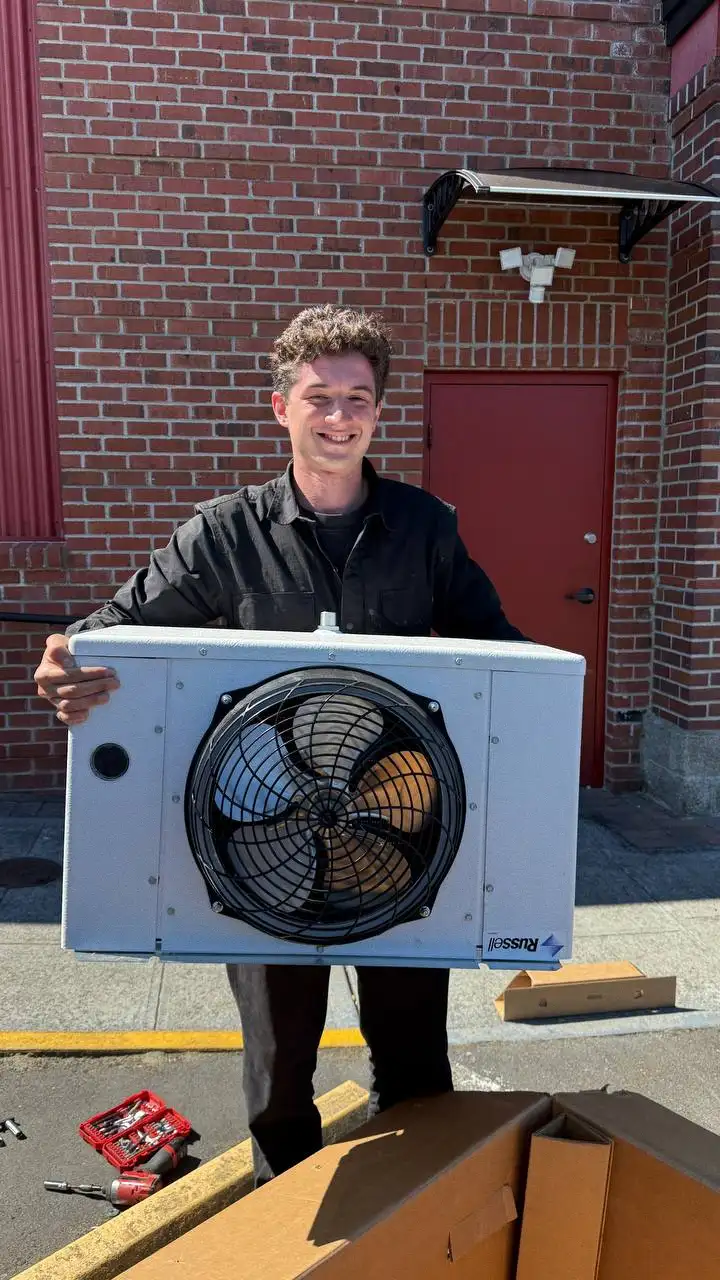


The four faults behind most warm boxes
- Controls that drift: A thermostat or sensor that reads two degrees off lets the box creep warm all shift. We check it against a probe in the product, not just the display, then recalibrate or replace it.
- A condensing unit that hums or trips: A hum with no start, or a breaker that pops at startup, gets a capacitor, contactor, and amp-draw check before anyone says compressor. If it really is the compressor, you see the readings that prove it.
- Frost on the evaporator: On a cooler, a frosted coil usually means a fan is down, stacked product is blocking airflow, or the drain is backing up. We clear it, work out which one it was, and fix that so the frost doesn’t come back next week.
- Doors that don’t seal: A torn gasket, a sagging hinge, or a door that won’t close on its own lets warm kitchen air in. You see it as frost, sweating walls, and a compressor that never rests. We fit the gasket and adjust the door so it shuts by itself.
“If we can see it, measure it, and have the part on the van, it usually gets fixed on the first visit. If we can’t, you still leave knowing what failed and what the part will cost.”
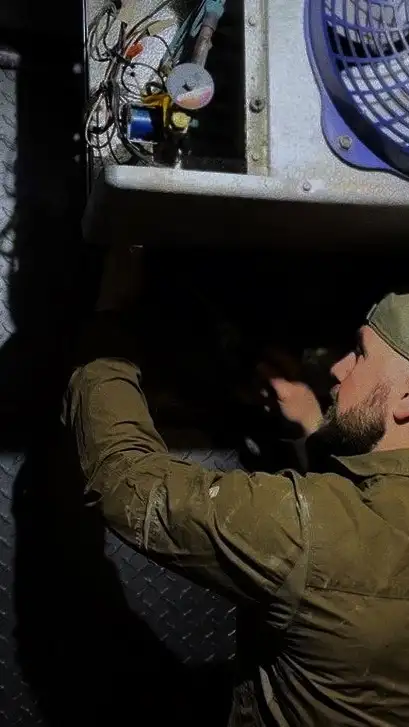
Head pressure, dirty condensers, and the replacement question
A warm box tends to show the same signs: it won’t recover after the door has been propped for a delivery, it cycles on and off every few minutes, or the thermometer sits closer to the danger zone than the setpoint. That is medium-temp work, and it is rarely a reason to price a new compressor on the first call.
Kitchen note: A condensing unit in a hot back hallway or a closed alley alcove is breathing air that is already warm. On a July afternoon that alone can push head pressure up. We note where the unit sits and whether it gets enough air, because no repair helps a unit with nowhere to dump its heat.
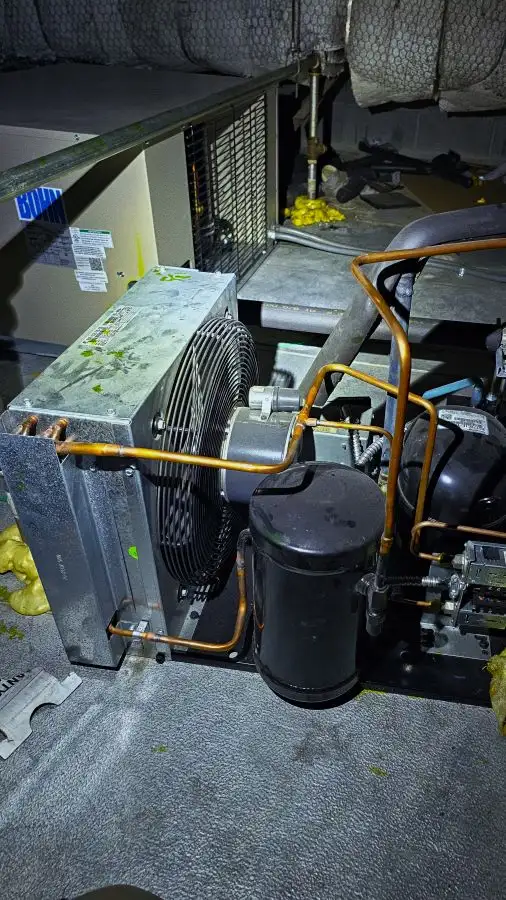
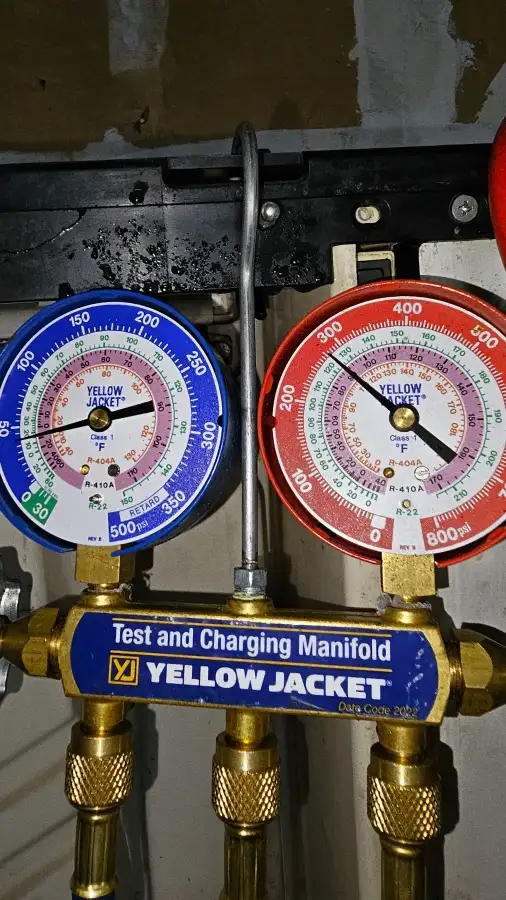
Short-cycling and high head pressure
A short-cycling box is either working too hard or cutting out on a safety. Our first stop is the condensing unit, using the same electrical and refrigeration checks as our walk-in cooler component repair work:
- Amp draw: Compare running amps to the compressor rating. High draw with poor cooling often tracks high head pressure, not a dead motor.
- Start components: Start/run capacitors and relays fail often enough that a no-start is not automatically a compressor replacement.
- Pressures and box temperature: Suction, head, and medium-temp pull-down tell us whether the circuit is restricted, starved at the condenser, or actually mechanically failed.
Plenty of no-start calls end at a relay, a capacitor, or a plugged filter-drier rather than the compressor itself. That is why the compressor is the last part we condemn, not the first.
Grease-loaded condensers on rooftops and behind the line
SODO commissaries, downtown restaurants, and neighborhood kitchens load condensers with grease and lint. The call often sounds like “the compressor failed” when the unit cannot reject heat.
- Where it sits: Rooftop packs and rear-line condensers both gum up on restaurant boxes.
- What we look for: Packed fins, blocked airflow, and head pressure that will not come down after a reasonable run.
- What we do: Clean and verify airflow, then re-check pressures. Refrigerant recovery only if the circuit requires it—not a parts swap on guesswork.
What we measure before anyone talks replacement
Replacement is a conclusion we reach after readings: amp draw, suction and head pressure, and whether the compressor is mechanically done. If it is, you see those numbers along with repair and replacement options, so the decision gets made with the owner or landlord, not on a tech’s say-so.
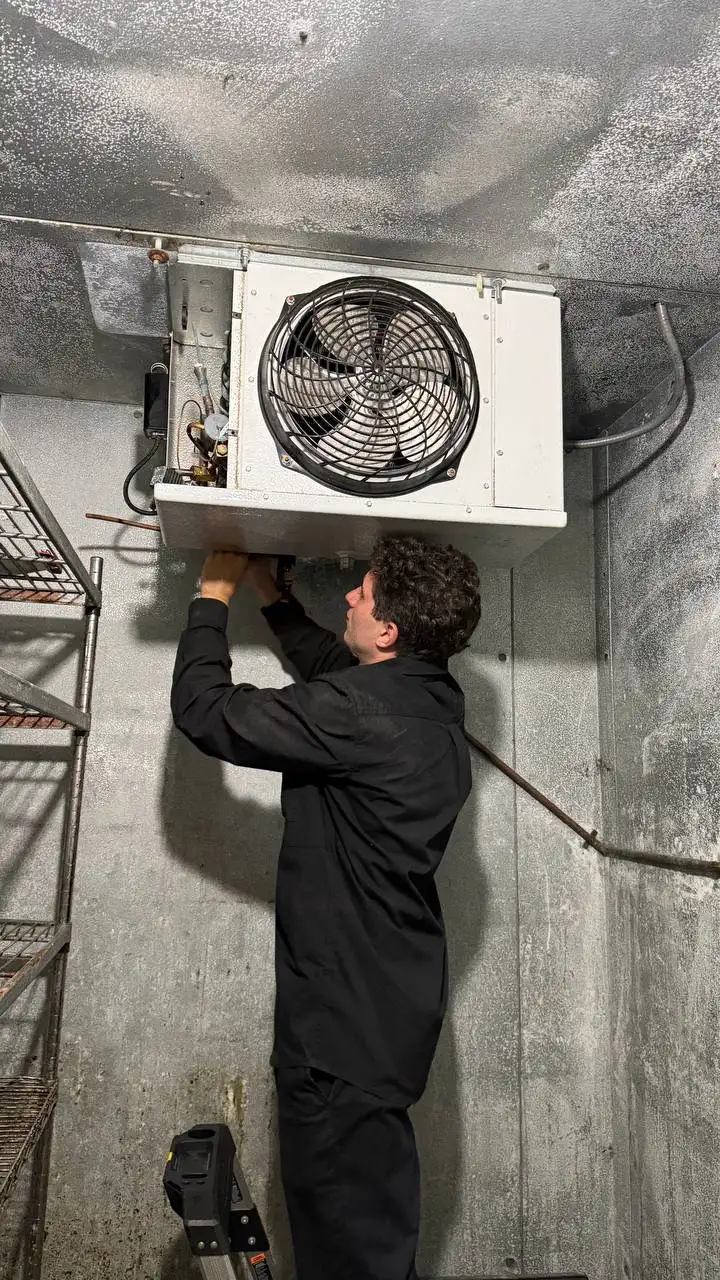
Ballard, Capitol Hill, and SODO calls all get the same sequence, whether the box is a six-foot cafe cooler or a commissary room you can drive a pallet jack into.
Who shows up, and what is on the van
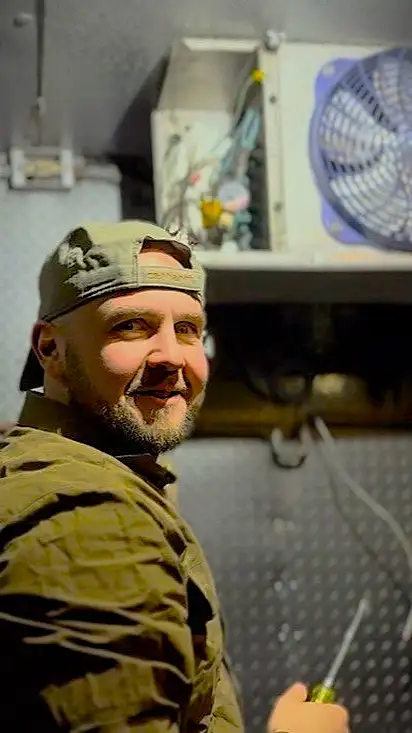
Our techs work under A/C Dr. Naz’s EPA Section 608 Universal certification and arrive with digital manifold gauges, a clamp meter, and a probe thermometer. That kit is the difference between reading the system and guessing at it.
That certification is what lets us recover, evacuate, and recharge refrigerant legally, under the EPA Section 608 rules. It also means we look for the leak before adding refrigerant, instead of topping off a slow leak and coming back next month.
Before we leave, you get the readings, what failed, what we replaced, and anything we saw that is likely to fail next, so the next call is not a surprise.
The standards behind each visit:
- Refrigerant handled by the book: recovery, evacuation, and charging follow federal Section 608 rules on every box, large or small.
- Wet-season habits: from October on, door heaters, gaskets, and drain lines get checked early on every call, because that is when the damp air starts icing coils.
- Reading after the visit: the refrigeration FAQ answers the upkeep questions owners tend to ask once the box is cold again.
Seattle neighborhoods on our cooler routes
Restaurants, grocers, and commissaries in these corridors are all on the route:
- Downtown & Pike Place: market stalls, hotel kitchens, and lunch-rush counters
- South Lake Union & Belltown: campus cafeterias, hotels, and mixed-use towers
- SODO & Georgetown: commissaries, production kitchens, and freight docks
- Capitol Hill & First Hill: independent restaurants and cafes, often in older buildings
- Ballard & Fremont: neighborhood dining and small food makers
Dispatch, ZIP Codes and Building Access
If product is already above temperature when you call, tell the dispatcher. A box that is warm and climbing gets triaged ahead of one that is holding but noisy. Same-day visits depend on capacity that day, and the dispatcher will tell you where you sit in the queue.
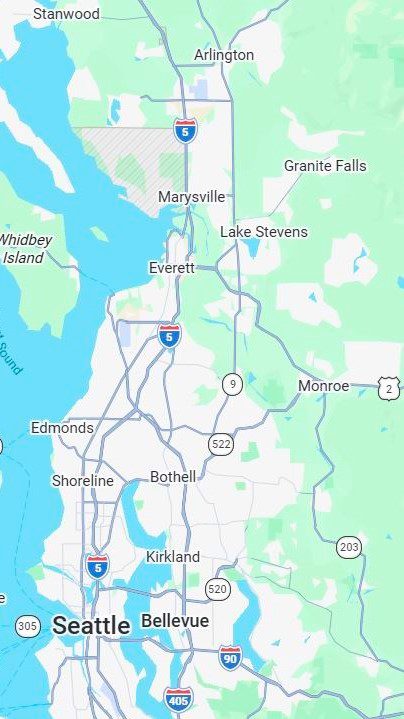
We run walk-in cooler repair in Seattle across 98101, 98109, 98134, and 98107: downtown and Pike Place, South Lake Union, SODO, and Ballard. A drifting cafe box on Capitol Hill and a production cooler in SODO get the same first hour: box temperature, controls, airflow, then the condensing unit.
Downtown, parking and building access can take longer than the repair. If your building needs a loading-dock reservation or an engineer to open the roof hatch, mention it when you call so the tech isn’t waiting at the door.
Kitchen across the lake or down near the airport? The neighboring city pages are listed below.
Cooler pages for nearby cities
Questions operators ask before we roll a truck
What should we check before calling?
Read the thermometer inside the box, not just the display, and note the setpoint. Make sure the door closes on its own and nothing is stacked against the evaporator fans. If you can reach the condensing unit safely, see whether it is running. Our safe checks before you call walk through the rest without opening any panels.
Why is there water on the floor under the coil?
On a cooler that is usually the drain: a clogged line, a cracked or tilted pan, or a line that lost its slope when shelving got moved. Sometimes the coil has been icing and drops the melt all at once. We clear and test the drain, then find out why it backed up. More on water and drain problems.
Can you look at other equipment while you are here?
Yes, as long as it is on the ticket. A prep table or reach-in that runs warm gets the same refrigeration checks, so mention it when you call and we will plan the time. Hot-side problems with ovens or fryers are a different trade; the commercial kitchen appliance repair page covers those.
Will you tell us if the box is not worth fixing?
Yes. If the compressor is mechanically done, the panels or door frame are failing, or repairs keep stacking up, we show you the readings and the repair cost so you can weigh them against replacing the unit. When it comes to that, you hear it straight, with numbers.
Not sure what you are looking at? Describe the symptom on the phone and we will tell you whether it needs a visit.
Warm box? Tell us the box temperature at (425) 535-8990, or have us call you back.
HVAC/R Certified | Locally Owned | Professional Diagnostics