
Freezer tripping, struggling in the cold, or slow to pull down?
Commercial Walk-In Freezer Repair | Redmond, WA

EPA Section 608 Universal certified, licensed, and insured, servicing low-temp boxes in kitchens, cafés, and grocery stores
Kitchens, cafés, and back rooms we work in
From the downtown core and Overlake out to Marymoor, we handle walk-in freezer repair in Redmond for hotel kitchens, campus cafés, grocery back rooms, and restaurant lines. A freezer keeps running all year against whatever the weather is doing, so a call can start at the box or at the condensing unit up on the roof or out back. The full list of freezer cities sits on our freezer repair hub.
Whether it sits behind a grocery aisle, a shop, or a kitchen line, a freezer gets the same diagnostic sequence. Urgency comes from what’s on the shelves, so mention the contents when dispatch picks up.

Signs that send people to the phone
These are the things that usually prompt the call. Any of them you can describe saves the tech time on arrival:
What people notice first
- Temperature that hangs a few degrees over setpoint even though the system never stops
- Frost building back on the coil soon after a defrost
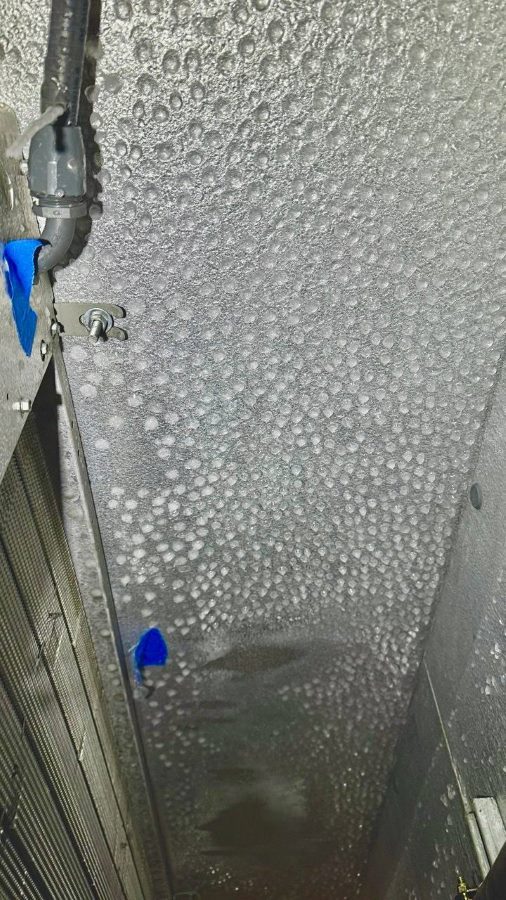
- Ice building around the drain, or water left behind once defrost finishes
- A door that’s hard to pull open right after someone shuts it
- On cold mornings, a freezer that shuts off and then starts again by itself
Two boxes, one system
Some sites, campus cafés and hotel kitchens especially, have two or more walk-ins, and a freezer may share a wall or a condensing unit with another box. When that’s the case, tell dispatch which boxes are connected and which one is acting up.
Our refrigeration FAQ pages cover defrost, icing, and warm boxes in a few lines each.


Starting points on every freezer call
- Probe first: the product’s actual temperature, checked against the display.
- What tripped: which safety or overload stopped the system, plus running amps against the nameplate.
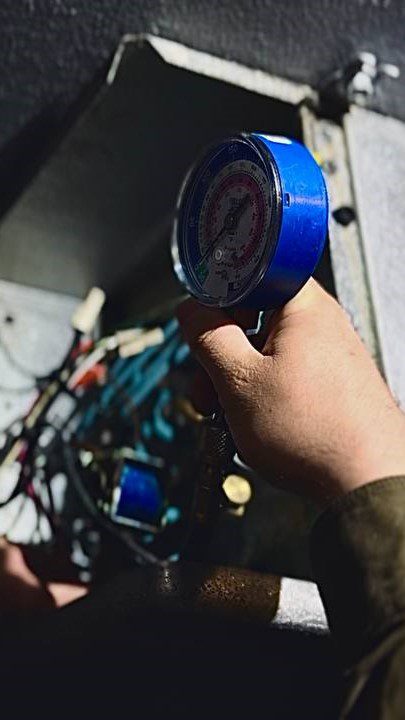
- Pressures: suction and head pressure on digital manifold gauges, read against that day’s outdoor temperature.
- Door: gasket, door-frame heater, and the heated pressure-relief port in the wall.
“A condensing unit on a January roof is doing a different job than the same unit in August.”
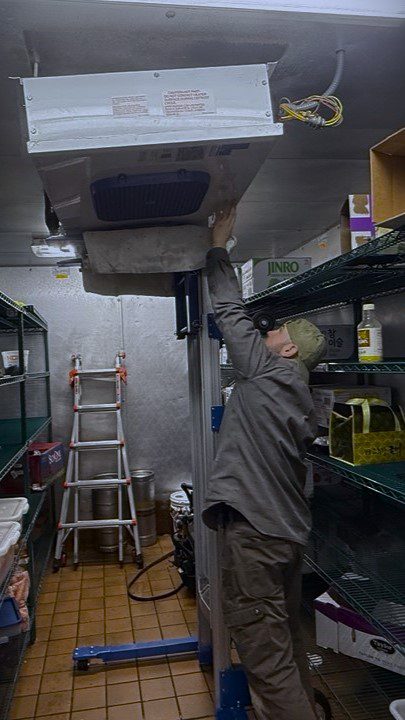
The right page for the equipment
If the trouble is a reach-in or a prep table instead, our Redmond refrigeration page is the better fit. Everything here is about walk-in freezers.
If the box giving you trouble holds produce or dairy rather than frozen stock, it’s a medium-temp walk-in, and our Redmond walk-in cooler page is the place to start.
Once in a while the fault turns out to be somewhere else, like a reach-in or a piece of hot-line equipment. The tech tells you before starting any work and points you to the right service.
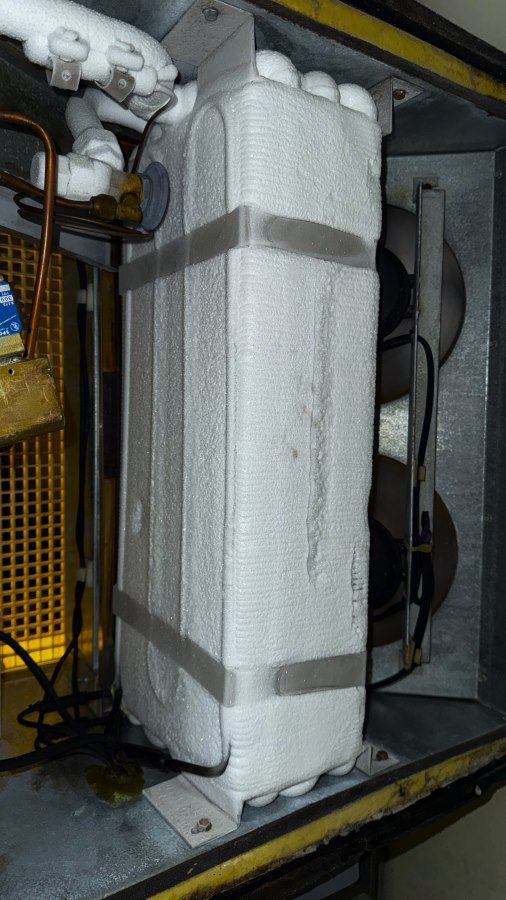
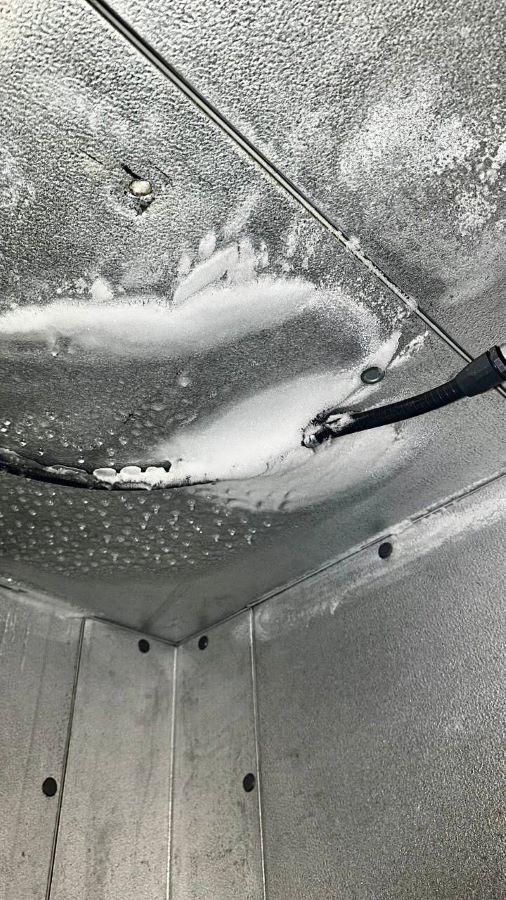
Cold weather and the outdoor unit
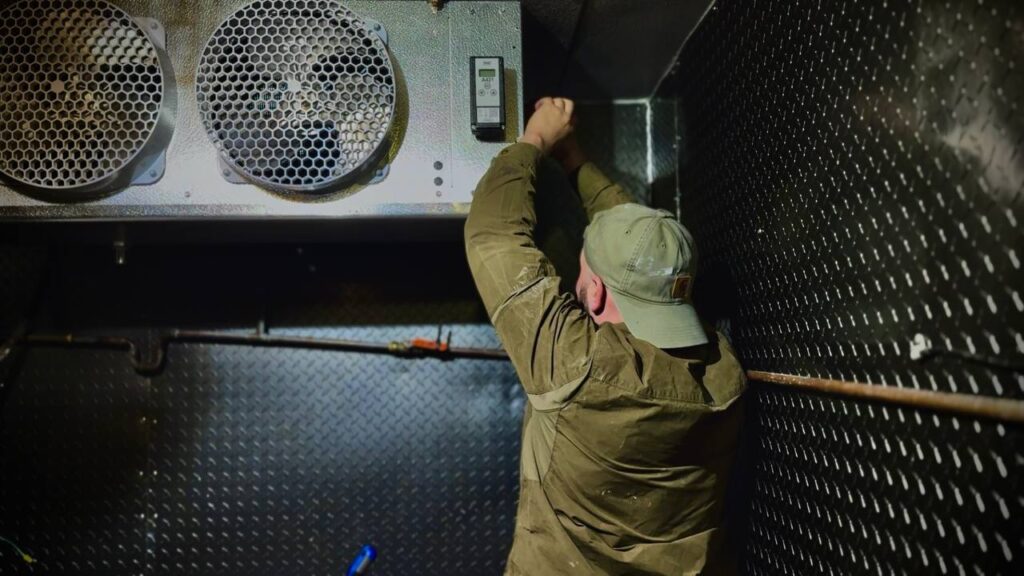
The condensing unit for a walk-in freezer usually sits outside, on a roof or in a yard behind the building, and it keeps running through the winter. Cold air sounds like it should help, but a unit that gets too cold loses head pressure. The valve feeding the coil can’t pass enough refrigerant, the coil runs starved, and the box takes longer and longer to pull down. On a cold morning the low-pressure safety may shut the system off, and it starts back up on its own once the pressure recovers.
What gets checked when it’s cold out
The tech reads suction and head pressure with digital manifold gauges and compares them with the outdoor temperature. Next come the controls that hold head pressure up in winter, usually a condenser fan that should cycle off in the cold or a valve that keeps refrigerant back in the condenser, and the crankcase heater that stops refrigerant from settling in a cold compressor. Readings only count once the condenser is clear of snow, ice, or leaves.
Most of the small parts involved, like controls, fan motors, and capacitors, ride on the van. A bigger part gets ordered, and its price and expected delivery date are part of the conversation before anyone leaves.
Licensed techs, real instruments
Every tech is licensed and insured, and the company carries HVAC/R certification plus EPA 608 Universal. Expect gauges on the lines, a clamp meter on the wiring, and a probe thermometer in the product before anyone talks about parts.
When the sealed system has to be opened
Sealed-system work starts with recovery: refrigerant is pumped into a recovery cylinder before a valve, drier, or other sealed component is opened up, which is what EPA Section 608 requires.
The written record
Each visit ends with a written summary listing the readings taken, what was repaired or adjusted, and any part still on order. For the standards every job follows, see our professional standards page.
Service areas, routes, and timing
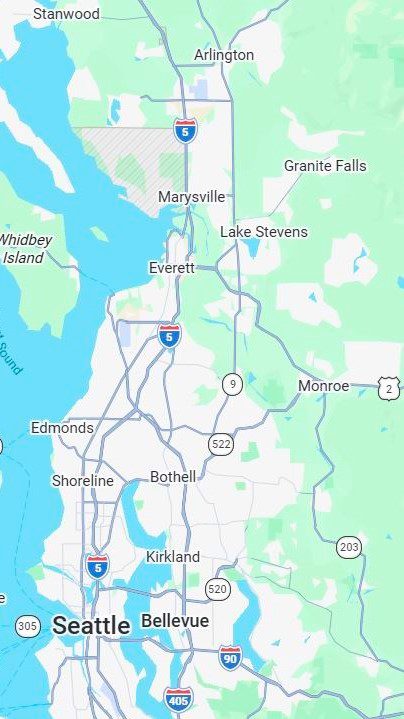
Walk-in freezer repair in Redmond covers the whole city, every address in 98052, 98053, and 98073. You get a time before you hang up; whether it’s today depends on how full the schedule already is.
Where the vans run
Areas we cover:
- Redmond Town Center and the downtown core: restaurant kitchens and food counters in the retail blocks
- Overlake: cafés serving the office campuses and ground-floor food spots in mixed-use buildings
- Education Hill, Marymoor, and Willows Road: grocers, dinner spots on the neighborhood streets, and food-service operations
Other walk-in freezer service areas
Also covered for freezers: Bellevue next door, Seattle on the far side of Lake Washington, and Everett up I-5 to the north.
Related hubs and resources:
Freezer questions, answered
Should the freezer get looked at before winter?
It’s worth doing in the fall. October visits cover the door gaskets, door-frame heaters, and drains, since wet weather hits those first. Freezer visits add the outdoor unit’s winter controls and a clear path around the condenser.
Why is the freezer door hard to open right after it closes?
Usually it’s the pressure-relief port. Air that rushes in while the door is open shrinks as it cools, which pulls the door tight; a small heated port in the wall lets air through so the door opens normally. If the port’s heater fails, the port can freeze up. Forcing the door strains the gasket and hinges, so mention it when you call and the tech will check the port and its heater.
Does fixing a freezer usually mean adding refrigerant?
Most of the time, no. Many freezer repairs, from fan motors to controls and capacitors, never touch the sealed system. When there is a leak, the tech locates and repairs it and confirms the fix before recharging; adding refrigerant to a leaking system is not the repair.
How do we know the repair actually held?
The tech doesn’t leave on the first good reading. They wait for the compressor to shut off at setpoint by itself, take one more probe reading from the product, and put both in the summary.
Freezer losing temperature now?
If product temperature is climbing, call (425) 535-8990; it helps to have the display reading handy. Or send us your details and we’ll ring you. Dispatch will say on that same call whether a tech is free today.
HVAC/R Certified | Locally Owned | Professional Diagnostics