
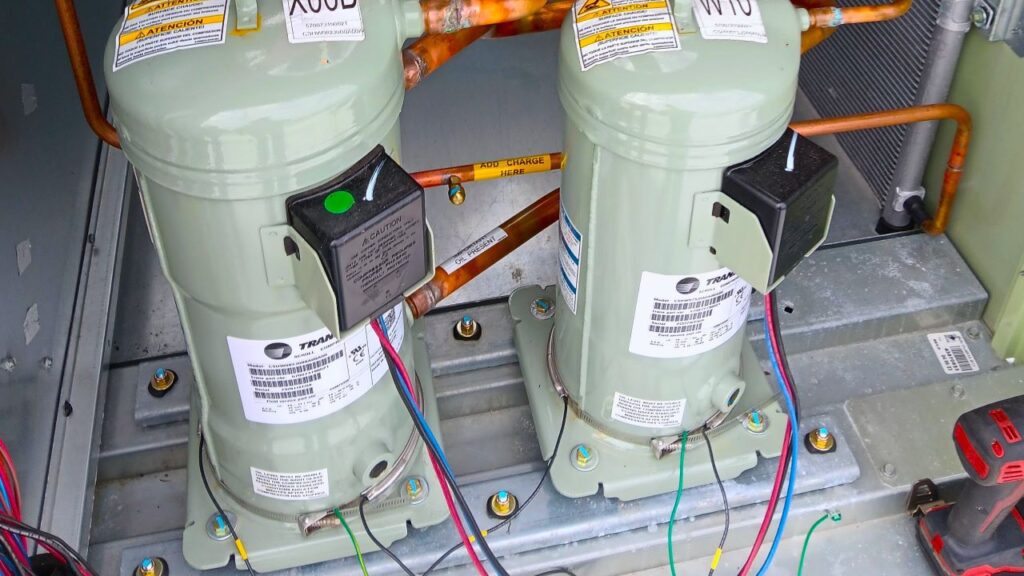
Direct answer: A commercial rooftop unit (RTU) high-pressure lockout means the system shut down to protect the compressor because head pressure climbed too high—usually from restricted condenser airflow, a failed condenser fan, dirty coils, or an overcharge—not because the unit “just needs a reset.”
Resetting the switch without finding the thermal bottleneck can send the compressor back into the same failure mode. This article is for commercial RTUs and package units on facilities in the Greater Seattle area—not residential split systems.
What the building staff sees
- No cooling (or heating, if a heat pump in the wrong mode)
- RTU fan running but compressor off, or compressor that starts then stops
- Fault code or manual reset required on the high-pressure control
- Condenser section that feels unusually hot or sounds strained
Why head pressure spikes on commercial RTUs
Condenser airflow problems
Dirty condenser coils, failed condenser fan motors, worn belts, or blocked discharge air paths are the most common causes we see on Puget Sound rooftops. Even in mild weather, a coil that cannot reject heat will trip high pressure quickly when the compressor loads.
Non-condensables and refrigerant issues
Overcharge, air in the system, or restricted metering devices can raise high-side pressure. These require measured diagnosis—suction and discharge readings, superheat and subcooling—not repeated top-offs.
Electrical and control faults
A contactor or capacitor issue can cause a fan to run at wrong speed or intermittently. Sequence-of-operation testing confirms what should energize before and after a cooling call.
Checks before you reset (facility manager safe list)
- Confirm supply and return grilles are open and filters are not collapsed.
- Look for obvious debris on the condenser section visible from the roof access point—do not open panels if you are not qualified.
- Note whether the condenser fan runs steadily when the compressor is called.
- Document the fault code and outdoor ambient temperature for your service vendor.
Anything involving refrigerant valves, electrical measurements, or control boards should be handled by licensed commercial HVAC/R technicians.
How we diagnose (engineering-first)
At A/C Dr. Naz we follow the unit’s sequence of operation: verify fan and compressor staging, measure static and refrigerant pressures where appropriate, inspect contactors and capacitors, and confirm condenser coil condition. We do not reset high-pressure switches and leave without identifying why head pressure rose.
Related commercial HVAC topics: rooftop unit repair in Seattle, commercial HVAC repair, and our KB guide on AC compressor electrical diagnostics (contactors and hum/no-start—not the same fault as high-pressure lockout).
When to call
Schedule service if the RTU trips high pressure more than once in a week, if the condenser fan is noisy or intermittent, or if comfort complaints follow every reset. Same-day diagnostics when capacity allows—(425) 535-8990 or contact us.