
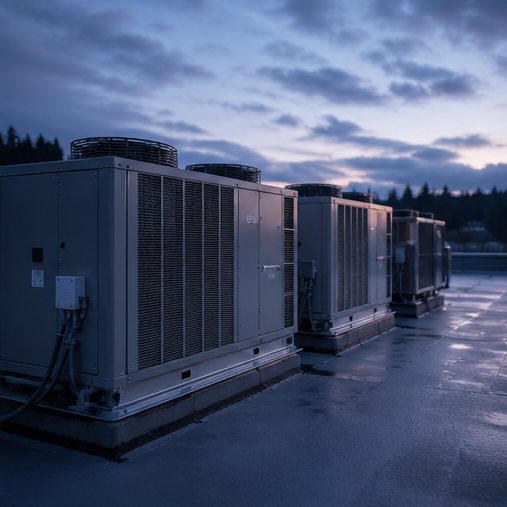
Commercial kitchens do not only heat food—they heat buildings. On peak Seattle summer nights, that matters because rooftops and splits must reject heat while also satisfying ventilation-facing loads tied to occupancy and kitchen adjacency. Equipment that “ran fine” in shoulder weeks can begin tripping, sagging, or hunting exactly when reservations peak.
Readiness framing for surge weekends lives here: Seattle hospitality peak‑season readiness.
Why rooftop HVAC fails “only when it gets busy”
Higher simultaneous loads tighten margins:
- Condenser-side rejection: higher ambient reduces lift margins; fouled coils or weak airflow convert that into head pressure drama fast.
- Evaporator-side airflow: filters load faster during peak occupancy weeks; static climbs; coils starve.
- Controls: economizers can disagree with outdoor conditions during marine-layer swings; staging tables may not match real sensible/latent demand.
Patterns kitchens mistake for “bad thermostats”
Guests complain while dashboards look acceptable because comfort is local: stratification, insufficient outdoor air delivery relative to occupancy, or supply paths robbed by pressurization imbalances often present as temperature complaints without a single obvious fault code.
If dining drift tracks hood-heavy periods, read the ventilation-balance companion piece: Hood Exhaust vs Makeup Air.
Cold-side alarms still deserve refrigeration routing
Rooftop HVAC struggles do not negate walk‑in physics. If inventory is moving out of band on cold-side equipment during rush pulls, treat that as refrigeration-first intent: Walk‑Ins Under Busy Nights, plus Ice & Line Refrigeration Alarms.
Technical transparency references (same posture as our hubs)
Depending on equipment and site rules, transparent troubleshooting anchors include economizer logic, compressor-side electrical discipline, reversing-valve behavior on heat pumps, makeup-air blower imbalance markers, and static/pressure relationships—useful language when describing intermittent surge-night behavior to dispatch.
Metro HVAC routing: Commercial HVAC repair in Seattle, WA · Hub: Commercial HVAC repair hub.
Dispatch expectations
Same‑day depends on capacity. Surge weekends can stack multiple hospitality emergencies across the corridor—honest triage beats imaginary omnipresence.
Call (425) 535-8990 · contact / callback. For dispatch packaging tips: What Photos and Details Actually Help.