
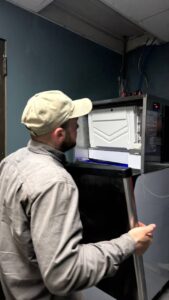
Restaurants and bars across Greater Seattle often call when a commercial ice machine “has power but no ice.” Before we open the refrigeration side, we confirm the water path—inlet, float, fill valve, and filtration—because those faults mimic a dead machine on a busy line.
Ice is a food contact surface. For handling context, see the FDA Food Code overview. For service routing, see commercial ice machine repair.
Why does my commercial ice machine run but not fill with water?
Check whether the reservoir ever fills: listen for the inlet valve, inspect the screen and float area, and confirm static pressure at the machine—not only that the wall valve is on. In Puget Sound, mineral buildup on strainers and fill valves is common even when city water quality is good.
We measure fill rate and filter condition (cartridge age, bypass leaks, correct OEM spec) before blaming the compressor or harvest circuit.
Can a bad water filter cause low ice production?
Yes. Restricted flow often appears as thin or soft ice, slow recovery after a bin dump, or “no ice” only during dinner rush when other BOH equipment draws water at the same time. Replacing a cartridge on calendar alone does not help if the bypass was left open or the wrong cartridge was installed.
How do I tell a water problem from a harvest problem?
Water path: no fill, overflow at the reservoir, or production tied to water use elsewhere.
Harvest path: ice forms but will not drop, bin sensor errors, or scale on the evaporator—see harvest and bin sensor diagnostics.
If alarms track with hot line conditions and condenser airflow, also read ice machines in hot kitchens.
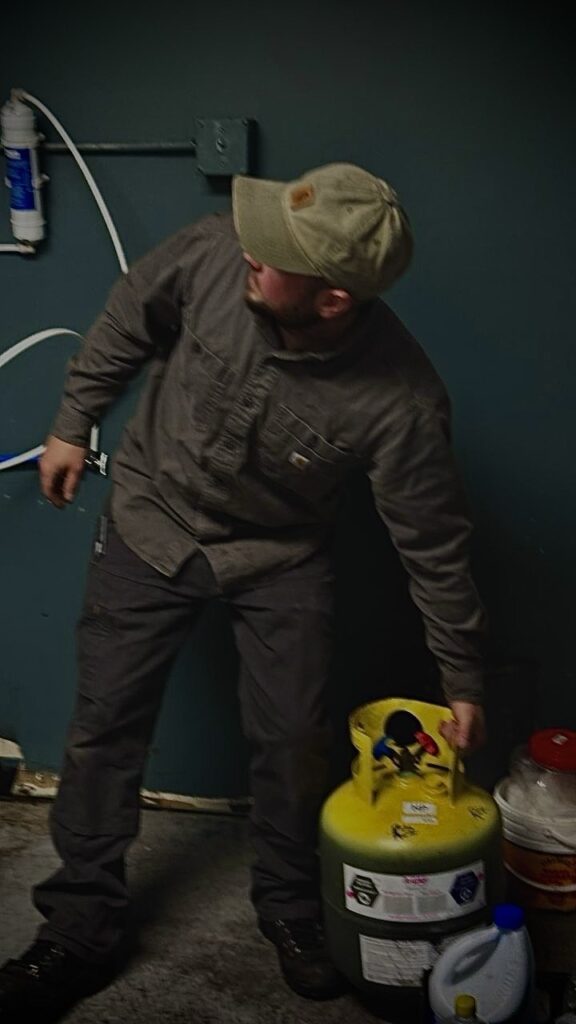
When to call
Call if the machine will not fill, leaks at the float, or production drops during service. (425) 535-8990 — same-day diagnostics when capacity allows. Send nameplate photos, filter history, and whether the reservoir fills at all.