
When the freezer ices over faster than it defrosts.
Commercial Walk-In Freezer Repair | Everett, WA

Low-temp work by a licensed, insured crew holding EPA Section 608 Universal and HVAC/R certification
Ice, water, and a box that won’t hold
A/C Dr. Naz does walk-in freezer repair in Everett for restaurants, caterers, hotel kitchens, and food distributors between the waterfront and Paine Field. Most freezer calls here start with one of three things: ice where it shouldn’t be, water on the floor after a defrost, or a box that slowly loses ground through the shift. For every other freezer service area, see our freezer repair hub.
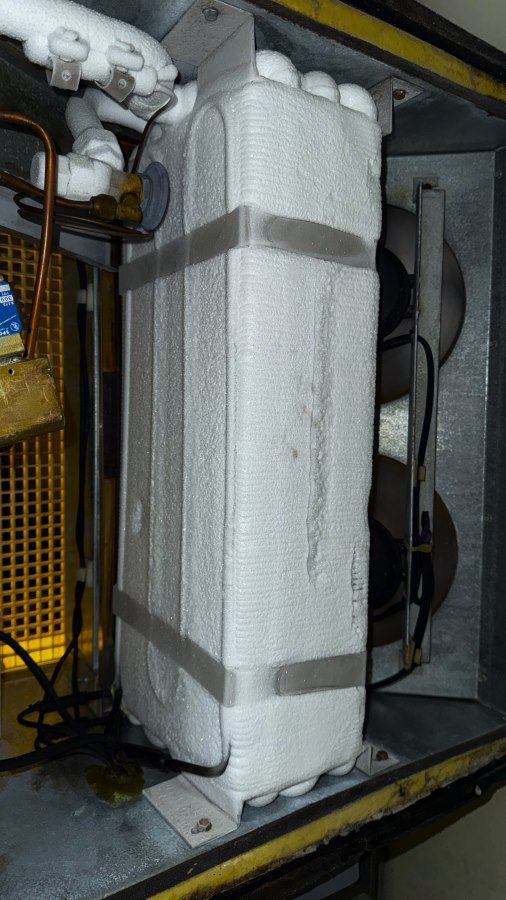
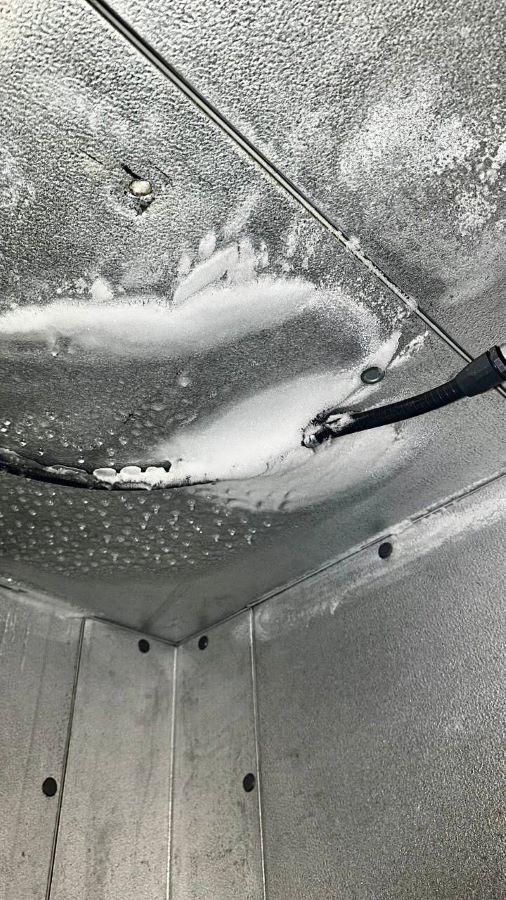
Damp air off the water makes a low-temp box work harder. Each time the door opens, moisture comes in and settles on the coil as frost. The heaters have to melt that frost and send the water out through a drain line that runs through air far below freezing, and if the water can’t get out in time, it freezes in the line and the next defrost starts with more ice than the last one.

What the freezer is telling you
Most low-temp problems show up as ice or water well before the display moves much. Tell dispatch if you’re seeing any of these:
Signs worth reporting
- Water on the floor, or an ice dam at the drain, after a defrost
- A coil that is still half white when the defrost ends
- Frost stripes around the frame or ice at the threshold, which usually points to the gasket or the door-frame heater
- A unit that runs and runs but won’t come back down to setpoint
- Breaker trips: note when they happen, and don’t keep resetting the breaker
When a coil fan goes quiet or starts to squeal
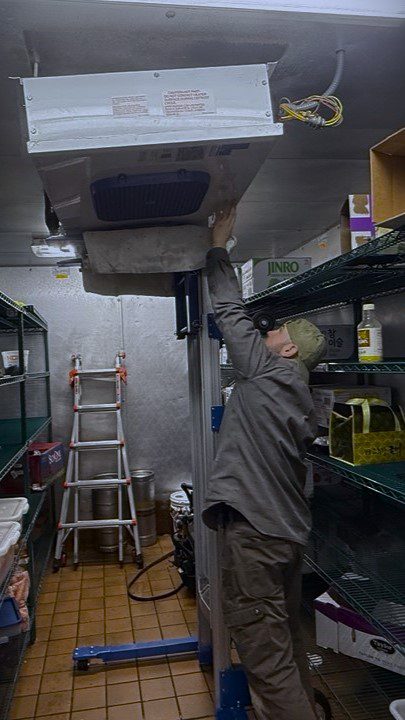
In a freezer, a stalled coil fan lets frost spread across the coil face while the far shelves slowly warm. The tech clears any frosted or blocked coil face first, then checks each fan for spin, speed, and blade condition and reads the motor’s current against its nameplate. A fan that squeals or rattles is often the next one to fail, and a motor that keeps failing usually traces back to coil ice, drain water, or wiring, so that cause gets found before another motor goes in.
Short answers on defrost, ice, and no-cool problems are in our refrigeration FAQs.


Ruled out before a part goes on order
- Two thermometers: the product’s real temperature is taken with a probe thermometer and set against the controller’s reading, and a sensor that disagrees is recalibrated or swapped.
- Electrical: the contactor, relay, and overload are checked, and amp draw is compared with the nameplate before a compressor gets blamed.
- Defrost: the controller’s defrost settings are read back, and the heaters and the termination are tested.
- Door: the gasket and the door-frame heater, the two places damp air gets in.
“If the water can’t get out, the next defrost has to melt it all over again.”
Freezer, cooler, or reach-in?
The rest of this page sticks to boxes that run below freezing. Smaller cold equipment in town has its own Everett refrigeration page.
Plenty of kitchens run a freezer and a cooler side by side, sometimes sharing a wall or a condensing unit. If more than one box is acting up, say so when you call, because one fault can show up in both. A medium-temp box on its own goes through our Everett walk-in cooler page.
Sometimes the trouble is really a reach-in or something on the hot line. If so, you’ll hear that from the tech before any work starts, along with who to call for it.
Defrost heaters and the heated drain line
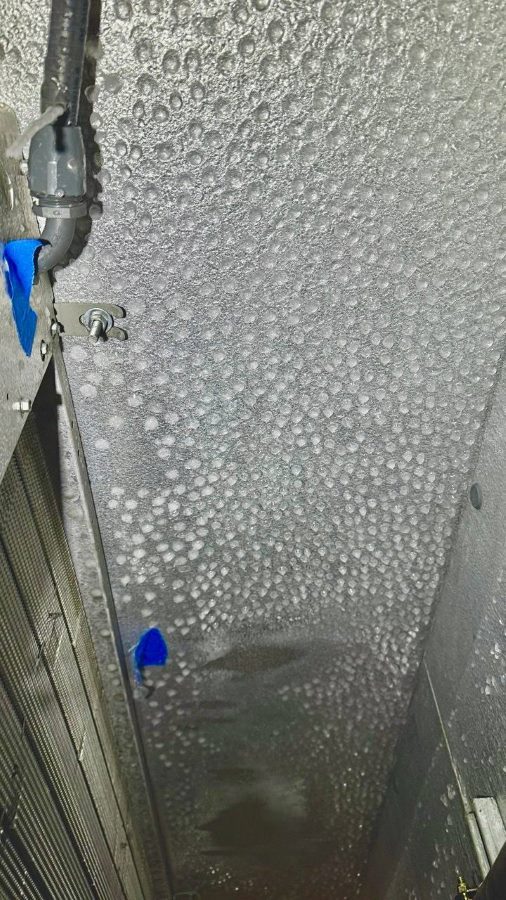
A freezer can’t count on the box warming up between cycles to clear its coil. It melts the frost on a schedule with electric heaters on the coil, and the meltwater leaves through a drain line that usually carries its own heater, since it runs through cold air. When the coil ices up, those parts get checked first: each defrost heater’s current with a clamp meter, the setting the controller uses to end defrost, and whether the drain-line heater is actually warm along its run.
What a full defrost should look like
Before the tech leaves, a defrost is started by hand and watched to the end. The coil should come clear, the water should run out of the pan and down the line without backing up, and the box should pull back down to setpoint afterward.
The van normally has defrost switches on board. If a defrost heater or a drain-line heater has to be ordered, you’re told the price and when it should arrive before the tech goes, and any setting that got changed is written into the visit summary.
Who does the work
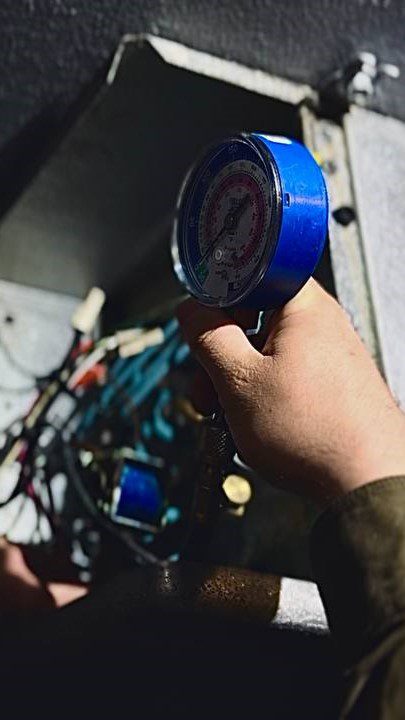
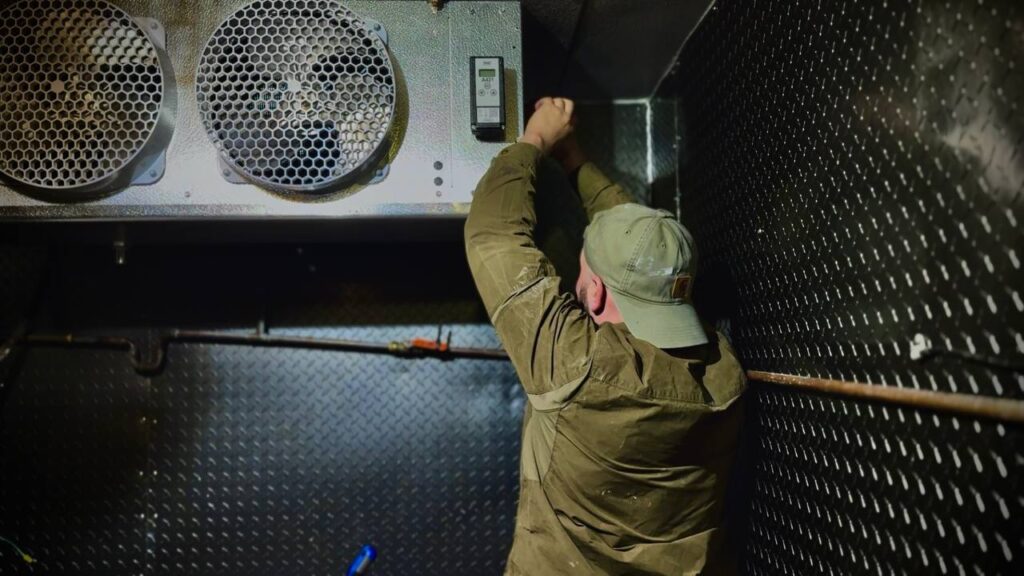
Everyone on the crew is licensed and insured, and the work runs under the company’s EPA Section 608 Universal and HVAC/R certification. On a freezer call the tech brings digital manifold gauges for pressures, a clamp meter for current, and a probe thermometer for the product itself.
Refrigerant handling
When a valve, filter drier, or other sealed part has to come out, the refrigerant is first recovered into a cylinder under EPA Section 608. A leak is repaired and checked before the system is recharged; a top-off without a repair isn’t offered as the fix.
Before the tech leaves
The tech waits to see the compressor cycle off at setpoint, takes a last product reading, and leaves a summary of the closing readings, the repair, any changed control settings, and anything still on order. Our professional standards page lays out the rest.
Service areas for freezer calls
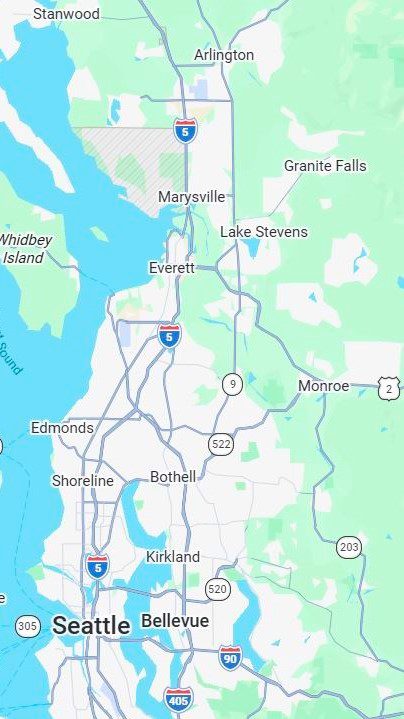
Most of our walk-in freezer repair in Everett happens between the waterfront and Paine Field. On the phone, give us the temperature and tell us whether it’s still going up: a box that keeps climbing gets seen ahead of one that’s loud but steady. We can sometimes get there the same day, when capacity allows.
Areas we cover
The freezer work we see most:
- Paine Field and south Everett: catering kitchens and high-turn cold storage
- Broadway and central Everett: busy dining rooms, and hotels with their own kitchens
- Port of Everett and the marina: waterfront restaurants, port-side cold rooms, and distributors
Other walk-in freezer service areas
Freezer pages for neighboring areas: Marysville, just across the river; Seattle; and Bellevue.
Related hubs and resources:
Questions we get on freezer calls
The floor is wet and the drain is full of ice. What do we do now?
Leave the door closed and shift whatever you can least afford to lose into another freezer that’s holding. Jot down the box temperature every thirty minutes; the trend helps the tech more than a single reading. Leave the ice on the coil alone too: chipping at it bends fins, and a damaged coil costs far more than the original fault.
Why does the ice come back a week after someone melts it?
Melting the ice treats the result, not the cause. In a freezer that cause is usually heaters that shut off too soon, a drain line that freezes solid, or a door letting damp air in. Tell us if someone has been clearing ice by hand on a schedule; how often it returns says a lot about which of the three it is.
Will one visit be enough?
Usually. The parts that fail most, fan motors, controls, capacitors, and defrost switches, tend to be on the van. Bigger parts like compressors and coils usually have to be ordered; until they arrive the box is kept as stable as possible, and the price and expected delivery are given before the tech heads out.
Anything we should have ready for the tech?
Someone who can let the tech into the box and up to the condensing unit, whatever temperature notes you’ve taken, and any alarm codes or breaker trips you’ve seen. If the breaker has tripped more than once, leave it off until the tech gets there.
Is the box still warming?
Call (425) 535-8990 with the reading on the display, or request a callback. Dispatch will tell you on that call whether a truck can get there today, or give you a time to expect one.
HVAC/R Certified | Locally Owned | Professional Diagnostics