
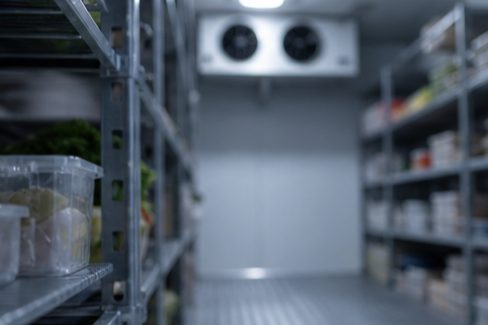
If your Seattle-area hospitality operation feels “stable” on slower Tuesdays but starts bleeding temperature on slammed Fridays, you are not imagining it. Walk‑ins do not fail randomly—they fail under load. Peak reservation nights stack prep pulls, constant door cycles, hotter ambients behind the line, and longer compressor run hours until marginal refrigeration behavior turns into something your kitchen cannot ignore.
This article is written for commercial kitchens—restaurants, hotel banquet prep, institutional kitchens, and busy grab‑and‑go concepts—not residential refrigerators. If you want the broader seasonal framing we use across surge weekends and tourism-heavy nights, start here: Seattle hospitality peak‑season readiness.
Why walk‑ins “choose” busy nights to look broken
Walk‑in coolers are steady-state machines pretending to be simple boxes. When traffic is light, small inefficiencies hide inside tolerances: slightly elevated superheat trends you never notice, condenser airflow that is “good enough,” door gasket leakage that does not matter when doors stay closed, and defrost termination behavior that never gets stress-tested.
Busy nights remove slack from the system:
- Door cycles spike. Every opening dumps sensible + latent load into the box and interrupts stable stratification. Recovery demand climbs.
- Kitchen ambient climbs. Cooking load, dish exhaust relationships, and crowded bodies raise the temperature around condensing sections—especially when airflow paths are tight or maintenance slipped.
- Prep pulls concentrate. Large simultaneous pulls force pulldown work during service—not slowly overnight.
- Compressors run hotter and longer. Electrical companions (contactors, capacitors, relays) that tolerated intermittent duty now face sustained cycles.
The outcome is not mysterious “bad luck.” It is predictable refrigeration physics meeting operational intensity.
Busy‑night symptom patterns we hear most often from Seattle kitchens
Below are common presentations described by chefs and GMs. These are not diagnoses—just patterns that usually deserve refrigeration discipline rather than guess-and-replace.
1) Recovery slows after rush pulls
A kitchen calls because product temperatures creep upward after heavy prep withdrawals—even though the walk‑in “used to bounce back.” Recovery depends on available refrigeration capacity, airflow across coils, condenser heat rejection, and whether controls are actually executing the intended refrigeration cycle under elevated loads.
2) Frost patterns shift (and alarms become conversational)
Busy kitchens sometimes notice frost migrating or coil icing behavior changing week-to-week. Door openings inject moisture; marginal defrost schedules show up as nuisance icing first—then as airflow starvation—then as capacity collapse during the worst possible seating window.
3) Head pressure drama shows up as intermittent trips
Safety cutouts and nuisance trips often correlate with condenser limitations (dirty coils, restricted airflow, failing fans), marginal charge behavior that becomes obvious under heat, or control integrations that cannot maintain stable operation during rapid swings.
4) “It holds temp until line volume spikes”
Sometimes the walk‑in is not “broken,” but the building-side heat balance changed: makeup-air relationships, exhaust dominance, or ventilation imbalance raises surrounding conditions enough that refrigeration margins disappear exactly when you need them.
What accountable refrigeration work tries to verify before swapping parts
Commercial refrigeration repairs should not be theatrical. The goal is to tie observations to measurable behavior—within safe site rules—so leadership can choose between stabilize‑now repairs, staged interventions, and capital timing.
In practical dispatch language, that often means separating categories:
- Heat rejection path: condenser airflow, coil cleanliness margins, fan performance
- Airflow inside the box: evaporator airflow restrictions, ice buildup consequences, fan reliability
- Electrical integrity: stable starts under sustained demand—not only “it clicks”
- Control/defrost logic: scheduled versus demand behaviors under moisture-heavy nights
If your vendor jumps straight to major component replacement without explaining why measured behavior supports it, that is a signal—not proof—that you need a second opinion.
The dispatch honesty Seattle operators deserve during surge season
Across our Puget Sound routing corridor (consistent with how we describe dispatch elsewhere on this site), same‑day service depends on capacity. When boards fill—especially when multiple venues spike the same weekend—we prioritize inventory‑critical refrigeration risk first because spoilage is not negotiable.
That does not mean instant trucks everywhere. It means realistic ETAs, honest triage, and clear communication about access constraints (roof or rack locations, interior plant rooms, after-hours security).
For routing context specific to cold‑side intent, keep refrigeration workflows routed cleanly here: commercial refrigeration repair.
What you can send before we assign a truck (speed without hype)
If you want faster coordination without turning your kitchen into a guessing game, send:
- Exact symptom timing: “Starts drifting after 6pm pulls,” “only Fridays,” “since heat wave began,” etc.
- Photos: readable nameplate, controller/alarm screen when safe, obvious icing patterns
- Risk framing: inventory value versus guest‑floor comfort—helps dispatch prioritize without theatrics
- Access confirmation: unlocked mechanical paths, roof rules, after-hours contact
Call (425) 535-8990 for live coordination, or submit details through contact / callback.
When building HVAC gets blamed for a refrigeration problem
If dining zones drift warm while exhaust dominates and makeup-air cannot maintain neutral pressure, kitchens sometimes suspect “the AC.” Sometimes building HVAC is involved—but walk‑in complaints still deserve refrigeration-first routing when inventory is the hazard.
For building comfort equipment—packaged rooftops, splits, tenant cores—use the commercial HVAC hub and metro framing:
Closing operating principle
Busy nights do not create new physics—they expose weak margins. Walk‑ins reward kitchens that treat refrigeration like production infrastructure: predictable maintenance windows before surge clusters, disciplined door discipline where possible, and dispatch conversations anchored to evidence rather than panic swaps.
If this article matches what you are seeing on your line, keep it bookmarked next to your readiness checklist and route cold‑side emergencies through the refrigeration hub above—then call when temperature trends stop being theoretical and start threatening inventory.