
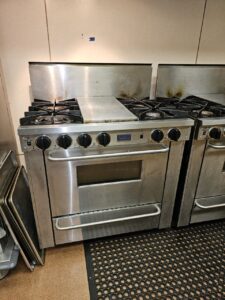
If you run a restaurant, commissary, or commercial kitchen in the Puget Sound area, use this as one checklist with two schedules: a short weekly look by your staff, and a deeper visit by a technician about every three months. You do not need separate maintenance plans for every appliance—just the same habits repeated on the cooking line.
A/C Dr. Naz provides commercial kitchen equipment repair and diagnostics (commercial properties only). We are EPA Universal certified and focus on finding the real cause of a problem—not guessing which part to swap first.
Weekly checks your team can do
Pick one person per shift to walk the line once a week (more often during your busiest months). It only takes a few minutes and can prevent a Friday-night outage.
- Ranges and fryers: Flames should burn steady blue at the base. Note slow ignition, weak heat, or longer cook times. If you smell gas after trying to relight, shut the unit down and tag it out of service.
- Ovens and steamers: Doors should close snugly. Steamers should reach temperature—not run nonstop without getting hot enough. Snap a photo of any error code and note the time.
- Electrical: Listen for clicking contactors, burning smells near panels, or fans that do not run when the equipment is on.
- Dining room comfort on busy nights: If guests complain about heat only when the kitchen is slammed, note it. That can point to ventilation balance, not a broken oven.
What a technician does on a scheduled visit
This is not a second weekly task—it is a scheduled service visit, typically about every 90 days, when a qualified technician goes beyond what staff can see on a walk-through. A solid visit usually includes:
- Gas equipment: Check gas pressure and combustion where applicable, and confirm ignition and safety devices work correctly.
- Electrical parts: Inspect contactors, relays, and high-limit switches for wear, pitting, or overheating.
- Steam and water-fed units: Descale when needed, check water levels, and verify temperature probes if the unit allows access.
- Connections: Tighten or test electrical connections where your policy allows—loose wiring causes odd, intermittent failures on older lines.
- Documentation: Write down readings and findings so the next visit compares to a baseline—not just “checked OK.”
Walk-in coolers and freezers are separate
This page does not cover walk-in coolers, freezers, or prep-line refrigeration. Those systems follow their own schedule (often handled by a refrigeration contractor). For cold storage, see commercial refrigeration repair and keep cooler issues separate from freezer issues.
When to call for repair (not just maintenance)
Maintenance catches wear early. Repair is for active problems. Call for diagnostics when:
- The same fault returns after a reset
- You are losing product or risking holding temperatures
- You smell gas again after a relight attempt
- Equipment is down during service and you need it back online
Same-day diagnostics may be available when capacity allows. Call (425) 535-8990 with photos of the nameplate and a short note on when the problem started.
For ovens, ranges, and fryers, visit our commercial kitchen appliance repair page. For a wider pre-busy-season list that includes ventilation and refrigeration, see our Puget Sound pre-season readiness guide.
How often should a restaurant schedule professional kitchen equipment maintenance?
Most busy Puget Sound kitchens schedule a professional visit about every 90 days on cooking equipment (ranges, ovens, fryers, steamers). Between those visits, a brief weekly walk-through by your team is enough—no separate maintenance program for each appliance.
What can my staff check between technician visits?
Your team can watch for weak or yellow gas flames, slow ignition, gas smell after relighting, longer cook times, steamers that never reach temperature, and oven doors that do not seal. Write down the time and which station was running—problems during the dinner rush often look different than at opening.
Does this checklist include walk-in coolers and freezers?
No. This page is for hot-side cooking equipment only. Walk-in coolers, freezers, and prep-line refrigeration need their own maintenance plan and a refrigeration specialist.