
Federally Certified HVACR Expertise
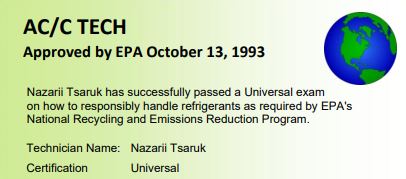
EPA Universal Certified. This is the highest level of certification provided under the EPA’s National Recycling and Emissions Reduction Program. It authorizes A/C Dr. Naz to handle refrigerants for all types of equipment, from small residential ACs to the most complex industrial refrigeration systems.


Same-day Diagnostic Schedule
Expertise
Transparent Pricing
Reliable service
Fully licensed bonded and insured
Accurate diagnosis
The Surgical Diagnostic Procedure: A 10-Point “Vital Signs” Check
Many companies often rely on “general labor” tactics—washing a coil and hoping for the best. At A/C Dr. Naz, we use HVAC diagnostics Seattle homeowners trust because we rely on data, not guesswork.
When we arrive, we perform a comprehensive “Surgical Diagnostic Protocol” to isolate the failure:
- Capacitor Microfarad Testing: We measure the capacitance of your run capacitors under load. A weak capacitor (even 10% out of range) is the leading cause of compressor heart attacks.
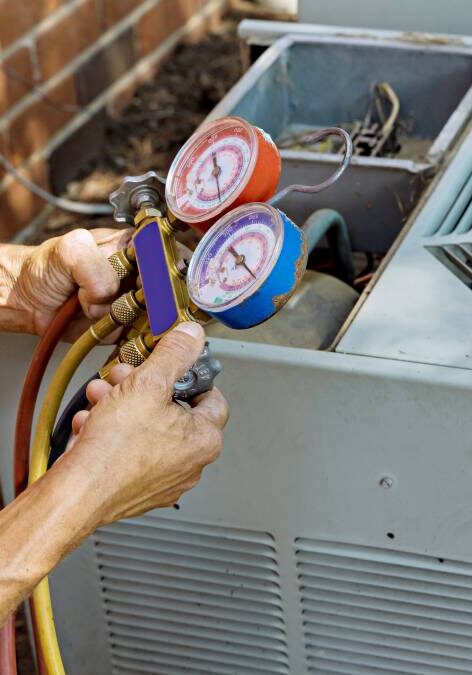
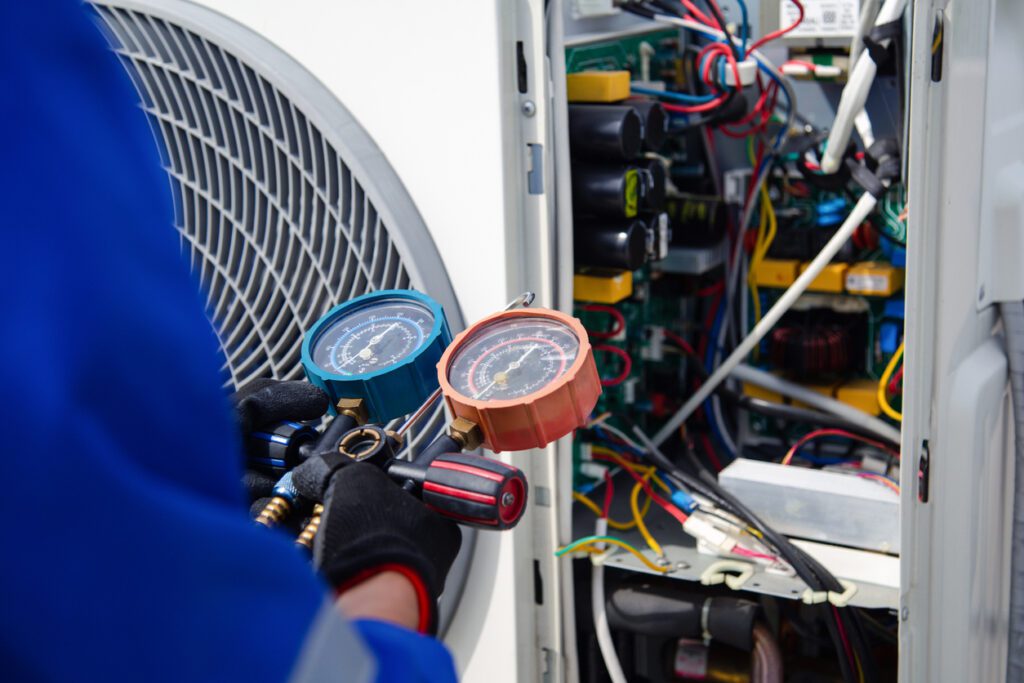
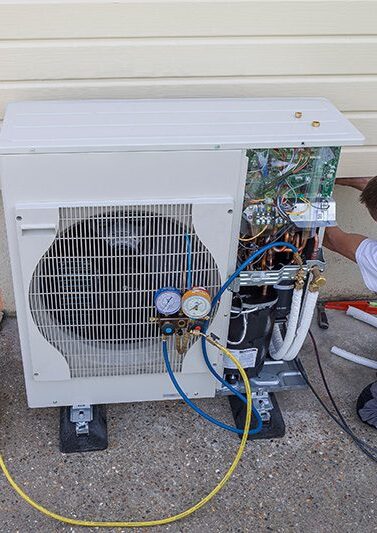
- Superheat & Subcooling Analysis: We don’t just “top off” Freon. We measure Superheat (to protect the compressor from liquid slugging) and Subcooling (to ensure liquid line efficiency), ensuring the charge is exact to the manufacturer’s specs.
- Static Pressure Testing: We measure the resistance your ductwork puts on the blower motor. High static pressure is the “high blood pressure” of HVAC—it kills variable-speed motors silently.
- Contactor Inspection: We check for pitting on the electrical contactor points. Pitted points cause voltage drops and arcing, which can weld the contactor shut, causing the AC to run continuously until it burns out.
- Amperage Draw (Amp Draw): We measure how much electricity the compressor and fan motors are pulling. High amp draw indicates friction, wear, or impending seizure.
- Evaporator Coil Thermal Scan: We check for a “thermal barrier.” A dirty coil isn’t just dirty; it acts as an insulator, preventing the refrigerant from absorbing heat from your home.
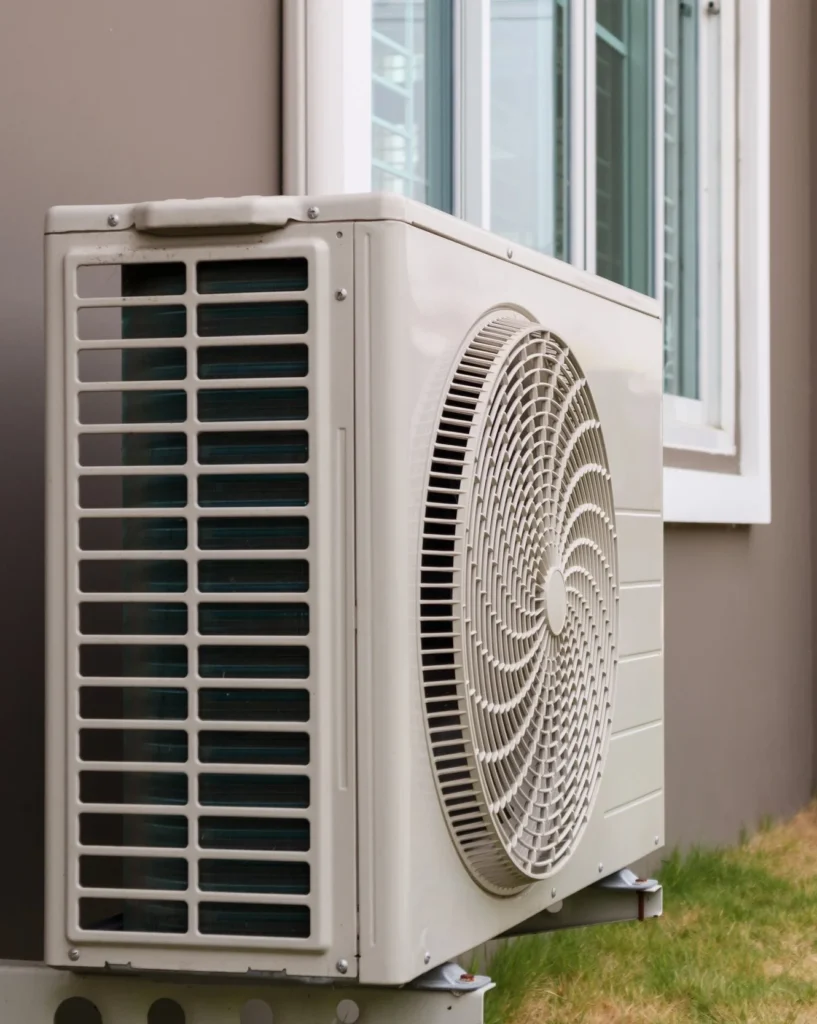
- Condenser Coil Heat Rejection: We verify the outdoor unit is effectively dumping heat. In our coastal air, salt and oxidation can degrade aluminum fins, ruining heat transfer.
- Condensate Drain Clearance: We vacuum and treat the drain line to prevent water damage and biological growth (algae) that can trip safety float switches.
- Thermostat Algorithm Check: We ensure your thermostat’s cycle rate is optimized for your specific equipment stage.
- Refrigerant Leak Detection: If levels are low, we use electronic sniffers and UV dye to locate the breach.
Need help with a ductless system? Visit our Mini-Split Installation page for specialized zoning diagnostics.
Seattle Area Deep Dive: The King and Snohomish County Climate Factor
We proudly serve the Greater Seattle Area, including Seattle, Bellevue, Everett, Edmonds, and King and Snohomish County.
While Seattle is known for rain, our “shoulder seasons” and increasingly hot summers (with 90-degree spikes) create a unique stress test for AC units.
- Humidity Management: Seattle air is humid. If your AC is oversized or short-cycling, it won’t run long enough to dehumidify the air, leaving your home feeling “clammy” and cold.
- Marine Layer Corrosion: For homes in Edmonds or Mukilteo near the water, salt air accelerates galvanic corrosion between copper and aluminum components. We inspect for this specific decay to catch refrigerant leaks before they empty your system.
Business owner? We also perform Commercial HVAC Repair for offices and retail spaces facing these same climate challenges.
The 2026 Refrigerant Transition & Your Repair
The HVAC industry is undergoing a massive shift. As a homeowner, you need to be aware of the “refrigerant cliff” affecting R-410A systems.
The Phase-Down of R-410A
Starting in 2025 and solidifying in 2026, the production of R-410A equipment is being heavily restricted to meet the EPA’s AIM Act regulations. This is similar to the phase-out of R-22 (“Freon”) years ago.
What This Means for Your Repair:
- Rising Costs: As R-410A supply dwindles, the cost to recharge a leaking system will skyrocket.
- The A2L Future: New systems utilize A2L refrigerants (like R-454B and R-32), which have a lower Global Warming Potential (GWP). These are mildly flammable and require specialized tools and training to handle safely.
- The Doctor’s Strategy: A/C Dr. Naz technicians are already certified in A2L handling. If your R-410A system has a major leak, we will perform a cost-benefit analysis. It is often malpractice to recommend an expensive repair on an obsolete system when newer, future-proof technology is available.
For more on efficiency standards and when to repair vs. replace, refer to ENERGY STAR’s Maintenance Guide.
Frequently Asked Questions Regarding AC Repairs
Is Your AC System in Critical Condition?
Don’t wait for a total system collapse. If you hear a noise, feel warm air, or see ice, call the doctor who understands the science behind the symptom.
For a full list of how we can help, browse our Air Conditioner Services. To stay updated on seasonal tips, check our Posts & News.
Schedule your diagnostic exam with A/C Dr. Naz today.
We are proud to serve homeowners across the region:
| Seattle Neighborhoods | Eastside Cities | South King County | Snohomish County |
| Ballard | Bellevue | Renton | Lynnwood |
| Queen Anne | Kirkland | Kent | Edmonds |
| West Seattle | Redmond | Auburn | Everett |
| Capitol Hill | Issaquah | Federal Way | Bothell |
| Magnolia | Sammamish | Maple Valley | Shoreline |
| Fremont | Woodinville | Covington | Marysville |
| Green Lake | Mercer Island | Des Moines | Mill Creek |
| Rainier Valley | Newcastle | Burien | Mountlake Terrace |
No matter where you live in the greater Seattle area, we prioritize fast, reliable service with the expertise your home deserves.